How to Stop Your Dog from Pulling on the Leash | Long Island Dog Training
How to Stop Your Dog from Pulling on the Leash: A Step-by-Step Guide
Picture this: You're walking down a beautiful tree-lined street in Hauppauge on a crisp autumn morning. The sun is shining, birds are chirping, and you're ready for a peaceful stroll with your dog. But within thirty seconds, your shoulder aches, your arm feels like it's being yanked from its socket, and you're being dragged down the sidewalk by your enthusiastic canine companion.
Sound familiar?
If you've ever been pulled down the street by your dog, you're not alone. Leash pulling is one of the most common complaints we hear from Long Island dog owners at The K-9 Center. Whether you're navigating busy Suffolk County sidewalks, exploring local parks, or simply trying to enjoy an evening walk around your neighborhood, a dog that pulls makes every outing stressful instead of enjoyable.
The good news? Loose leash walking is a completely trainable skill. With over 35 years of experience training dogs throughout Long Island, we've helped thousands of owners transform their pulling pups into polite walking companions. In this comprehensive guide, we'll show you exactly how to stop your dog from pulling on the leash using proven, effective training methods.
Why Do Dogs Pull on the Leash?
Before we dive into solutions, it's essential to understand why dogs pull in the first place. Your dog isn't trying to dominate you or deliberately misbehave—they're simply doing what comes naturally and what they've inadvertently been taught works.
Natural Speed Difference
Dogs naturally walk faster than humans. While you stroll at 2-3 miles per hour, your dog's comfortable walking pace is closer to 4-5 miles per hour. When confined by a leash to your slower pace, many dogs instinctively pull forward to move at their preferred speed.
Excitement and Exploration
The world outside is infinitely fascinating to your dog. Every tree, fire hydrant, and patch of grass contains valuable olfactory information. Walking around Ronkonkoma or exploring trails at Caleb Smith State Park offers countless smells and stimuli that your dog desperately wants to investigate. Pulling gets them to these interesting spots faster.
Opposition Reflex
Dogs have a natural opposition reflex—when they feel pressure in one direction, they instinctively push against it. This is why pulling back on the leash often makes dogs pull harder. It's not stubbornness; it's hardwired canine behavior.
Reinforcement History
Here's the real issue: pulling works. Every time your dog pulls and you continue walking, they learn that pulling successfully gets them where they want to go. If pulling has been working for months or years, you've unintentionally created a very strong habit that will take consistency and patience to change.
Important Note: Pulling isn't a dominance issue or a sign your dog doesn't respect you. It's simply a learned behavior pattern that can be changed with proper training techniques.
Why Loose Leash Walking Matters
Teaching your dog to walk politely on a leash isn't just about convenience—it's about safety, health, and quality of life for both of you.
- Physical Health: Constant pulling strains your dog's neck, throat, and spine, especially when wearing a traditional collar. For you, it can cause shoulder pain, back strain, and increased risk of falls—particularly on icy Long Island sidewalks during winter.
- Safety: A dog that pulls can yank you into traffic, pull you down stairs, or cause you to trip. For elderly owners or those with mobility issues, a pulling dog becomes a serious safety hazard.
- Enjoyment: Walks should be enjoyable bonding time, not a battle of wills. Many owners with pulling dogs walk them less frequently, depriving both dog and owner of exercise, mental stimulation, and quality time together.
- Opportunities: Well-mannered dogs are welcome in more places. Whether it's outdoor dining in Lake Grove, visiting pet-friendly stores, or attending community events, good leash manners open doors.
- Training Foundation: Loose leash walking teaches impulse control, focus, and responsiveness to you even with distractions—skills that carry over into all other training.
Choosing the Right Equipment for Leash Training
The right training equipment makes a significant difference in your success. Here's what we recommend at The K-9 Center for teaching loose leash walking to dogs throughout Suffolk County.
Front-Clip Harness (Recommended for Most Dogs)
A front-clip harness attaches the leash at your dog's chest rather than their back. When they pull, the harness gently turns them back toward you, making pulling unrewarding. This is our top recommendation for most dogs because it's effective, safe, and comfortable.
Best for: Most dogs, especially medium to large breeds, strong pullers, and dogs in early training stages.
Head Halter (For Strong, Persistent Pullers)
A head halter fits around your dog's muzzle and gives you control of their head direction. When they pull, gentle pressure redirects their attention back to you. Head halters require proper introduction and acclimation, but they're incredibly effective for large, powerful dogs.
Best for: Large, strong dogs, persistent pullers who haven't responded to other methods, and owners who need extra control for safety.
Standard 6-Foot Leash
For training purposes, a standard 6-foot leash is ideal. It gives your dog enough freedom to move comfortably while keeping them close enough for effective communication. Avoid retractable leashes during training—they teach dogs that constant tension on the leash is normal.
What to Avoid
- Choke Chains: These can damage your dog's trachea and neck, and they teach through pain rather than positive reinforcement.
- Prong Collars: While sometimes effective, these should only be used under professional guidance and are unnecessary for loose leash training.
- Retractable Leashes: These maintain constant tension and teach dogs to pull. Save them for appropriate situations after your dog has mastered loose leash walking.
Step-by-Step Guide to Teaching Loose Leash Walking
Now for the practical training steps. This method has been refined over decades of training dogs at The K-9 Center and works for puppies through senior dogs. Consistency is key—everyone who walks your dog must use the same techniques.
Phase 1: Foundation Training (Indoors)
Before hitting the streets of Hauppauge, start in your home where distractions are minimal.
- Attach the leash and let your dog wear it: Simply clip the leash on and let them drag it around the house for a few minutes (supervised) so they associate the leash with freedom, not restriction.
- Practice the 'check-in': Hold the leash and walk around your living room. Every few steps, say your dog's name. When they look at you, immediately reward with a treat. This teaches them to pay attention to you while on leash.
- Introduce the 'penalty yard': Walk forward with treats in hand. The moment the leash goes tight, stop walking completely. Don't move until your dog looks back at you or the leash loosens. When it does, mark with 'yes!' and immediately resume walking. Repeat continuously.
- Reward frequently: In these early stages, reward your dog every 3-5 steps of walking without pulling. Keep treats in your pocket and hand them down to your dog at your side.
Training Duration: Practice 3-5 sessions daily for 5 minutes each. Master this indoors before moving outside.
Phase 2: Low-Distraction Outdoor Training
Once your dog understands the concept indoors, move to your driveway or a quiet street.
- Start in your driveway or yard: Use the same techniques as indoors. Stop immediately when the leash tightens. Resume walking only when it loosens.
- Use the 'tree method': When your dog pulls toward something interesting, become like a tree—completely still and unmoving. Wait patiently. When your dog looks back at you or returns to your side, reward and continue walking toward what they wanted. They learn that pulling delays access to interesting things, while loose leash walking gets them there.
- Practice direction changes: Walk forward, then randomly turn left, right, or reverse direction. Say your dog's name before turning and reward when they follow. This teaches them to pay attention to your movements.
- Keep sessions short: Training walks should be 10-15 minutes at this stage. Quality matters more than distance. End each session while your dog is still successful.
Success Indicator: Your dog walks beside you for 20-30 steps consistently before pulling. You can complete a short block with only 2-3 stops.
Phase 3: Increasing Distractions
Now practice in more challenging environments around Suffolk County.
- Graduate to busier streets: Practice on streets with moderate foot traffic. Maintain the same standards—if they pull, you stop. No exceptions.
- Add environmental distractions: Practice near parks, other dogs (at a distance), people, squirrels, and birds. Start at whatever distance your dog can maintain a loose leash, then gradually decrease that distance over weeks.
- Use variable reinforcement: Instead of rewarding every few steps, begin rewarding randomly. Sometimes after 5 steps, sometimes after 20. This keeps your dog engaged and checking in with you frequently.
- Practice 'checking in' at distractions: When approaching something your dog finds exciting, say their name. If they look at you instead of pulling, jackpot reward with multiple treats and enthusiastic praise.
Timeline: Most dogs show significant improvement within 2-4 weeks of consistent training. Complete reliability may take 2-3 months, depending on your dog's age, breed, and pulling history.
Phase 4: Real-World Application
Apply your training in everyday Long Island situations.
- Downtown walks: Practice in busier areas like downtown Hauppauge or shopping centers where distractions are constant.
- Trail walking: Take your dog to local parks and nature trails. These environments are highly stimulating but essential for building reliability.
- Multiple walking partners: Have different family members practice the techniques. Dogs often behave differently with different handlers, so everyone needs to maintain the same standards.
- Long-duration walks: Gradually increase walk length. Even well-trained dogs may revert to pulling when tired, so build endurance slowly.
Common Mistakes That Sabotage Loose Leash Training
Even experienced dog owners make these mistakes that undermine their training efforts. Here's what to avoid:
- Inconsistency: Allowing pulling sometimes but not others teaches your dog that persistence pays off. If you allow pulling when you're in a hurry or tired, you're reinforcing the behavior you're trying to eliminate.
- Waiting too long to reward: Timing is everything. Rewards must come within 1-2 seconds of the desired behavior. If you wait until you dig the treat out of your pocket, your dog doesn't know what they're being rewarded for.
- Yanking or jerking the leash: Pulling back on the leash triggers the opposition reflex, making your dog pull harder. It also hurts and damages trust.
- Not using high-value rewards: If your rewards aren't more interesting than the environment, they won't work. Use real meat, cheese, or your dog's favorite treats—not their regular kibble.
- Progressing too quickly: Moving to high-distraction environments before your dog is ready sets them up for failure. Build slowly from easy to difficult situations.
- Training only on 'training walks': Every walk is a training opportunity. If you enforce loose leash rules during designated training but allow pulling on regular walks, your dog learns the leash means nothing.
- Getting frustrated: Dogs sense frustration and it makes training harder. If you're getting angry, end the session early. Training should be positive for both of you.
Breed-Specific Considerations for Long Island Dog Owners
Different breeds present unique leash training challenges. Here's what we see frequently at The K-9 Center:
Large, Strong Breeds (German Shepherds, Rottweilers, Mastiffs)
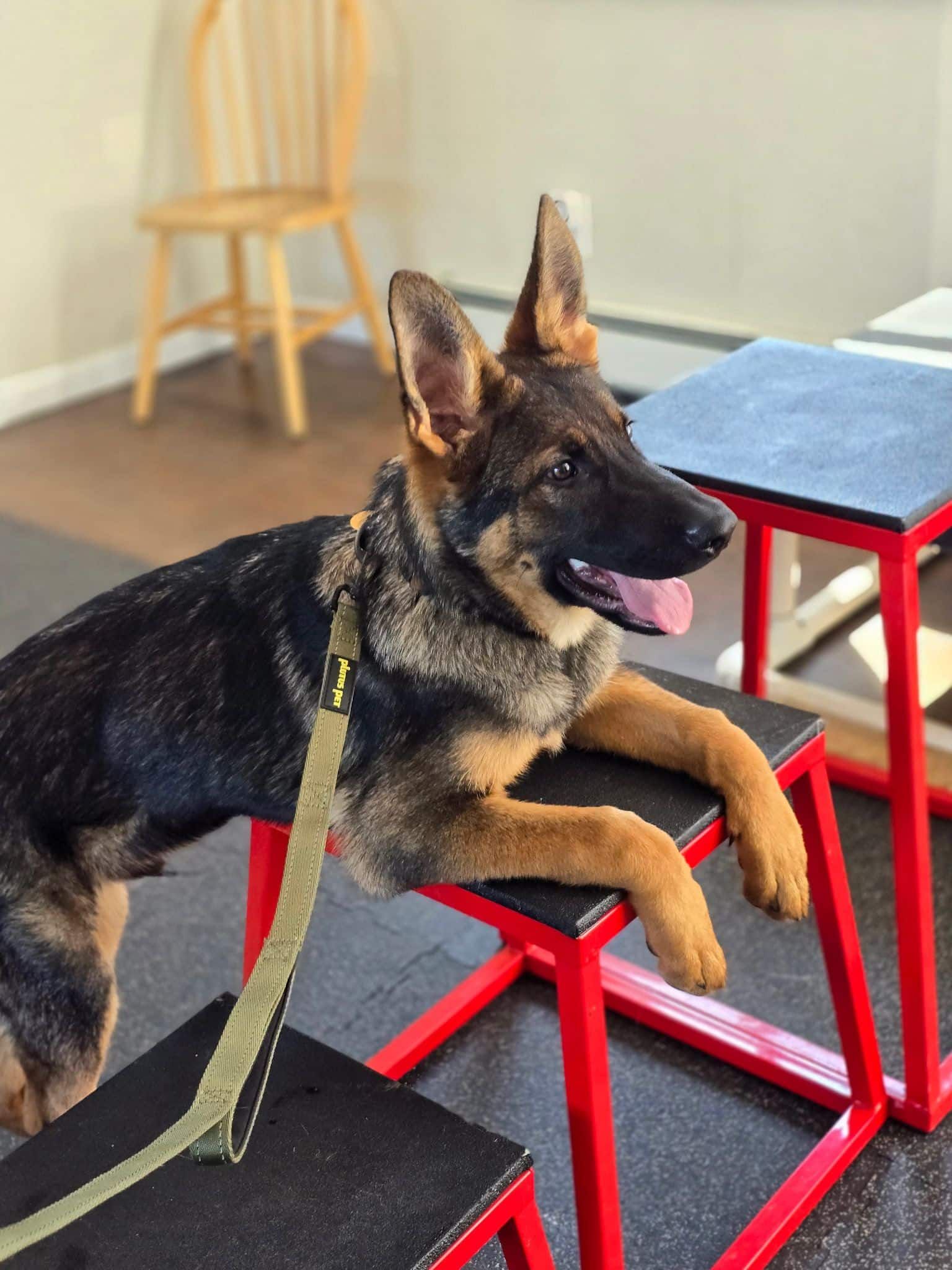
These powerful dogs can easily overpower even strong adults when they pull. Start training early, use a front-clip harness or head halter, and never allow pulling even once. Professional training is especially valuable for these breeds—The K-9 Center specializes in large breed training and German Shepherd development.
Hounds (Beagles, Basset Hounds, Bloodhounds)
Scent hounds were bred to follow their noses relentlessly, making loose leash walking particularly challenging. They require extra patience and may need more frequent rewards. Training around high-scent environments like parks should happen gradually.
High-Energy Breeds (Huskies, Border Collies, Australian Shepherds)
These breeds need significant exercise before training sessions. A tired dog learns better. Consider running or vigorous play before practicing leash skills.
Small Breeds (Chihuahuas, Yorkies, Dachshunds)
Small dog owners often tolerate pulling because it seems harmless. Don't make this mistake. Small dogs still need leash manners, and pulling is just as frustrating regardless of size. The training techniques are identical.
Advanced Tips for Suffolk County Environments
Living on Long Island presents unique challenges and opportunities for leash training. Here are specific tips for local conditions:
- Winter Ice and Snow: Practice extra caution on icy sidewalks. A pulling dog can cause dangerous falls. Shorten your leash temporarily for better control, and use ice-gripping boots for yourself.
- Beach Training: Long Island beaches are incredibly distracting environments. Master loose leash walking in less stimulating areas before attempting beach walks. Start in the parking lot, then gradually move closer to the water.
- Busy Sidewalks: In high foot-traffic areas, teach your dog a 'by me' or 'close' command that brings them tight to your side. This prevents tangling with pedestrians.
- Wildlife Encounters: Suffolk County has abundant wildlife—deer, rabbits, squirrels, and birds. Practice the 'leave it' command extensively and combine it with loose leash skills.
- Dog Parks: Approach dog parks with excellent leash manners. Practice staying focused on you despite other dogs nearby. This prevents excited pulling and potential conflicts at park entrances.
Troubleshooting: When Progress Stalls
"My dog pulls worse than ever!"
This is called an 'extinction burst'—when you stop rewarding an old behavior, it often gets worse before it gets better. Your dog is trying harder to make pulling work like it used to. Stay consistent. This phase typically lasts 3-7 days.
"My dog is perfect at home but pulls on real walks."
You've progressed too quickly. Go back to lower-distraction environments and build up more gradually. Increase difficulty in tiny increments—from your driveway to your street, then to one block away, then two blocks, etc.
"My dog only pulls toward specific things."
Practice specifically with those triggers. If your dog pulls toward other dogs, practice loose leash walking at gradually decreasing distances from other dogs. Start across the street, then half a block away, then closer over many sessions.
"Different family members get different results."
This is a consistency issue. Everyone must use identical techniques and enforce the same standards. Hold a family meeting, review the training steps together, and observe each other's walks to ensure consistency.
"My dog is too strong—I can't physically stop them."
This is a safety concern that requires professional help. At The K-9 Center, we work with powerful breeds daily and can provide hands-on guidance for managing strong dogs safely. A front-clip harness or head halter is essential, and you may need customized techniques for your specific situation.
Realistic Timeline: What to Expect
Understanding realistic expectations prevents frustration and keeps you motivated. Here's what typical progress looks like:
- Week 1-2: Your dog begins understanding that pulling stops forward progress. You'll see occasional loose leash walking, but frequent stops are normal. This feels tedious, but you're building the foundation.
- Week 3-4: Noticeable improvement in familiar environments. Your dog walks nicely for longer stretches before pulling. You can complete short walks with only occasional corrections.
- Week 5-8: Solid performance in familiar areas. New environments still present challenges, but recovery is faster. Your dog checks in with you more frequently.
- Week 9-12: Reliable loose leash walking in most situations. Occasional pulling occurs with major distractions (squirrels, other dogs), but your dog responds to corrections quickly.
- 3+ months: Loose leash walking becomes the default. Your dog naturally stays by your side with minimal reminders. Occasional refreshers keep skills sharp.
Remember: These timelines assume consistent daily training. Dogs with longer pulling histories may need additional time. Puppies often learn faster than adult dogs with established habits.
When to Seek Professional Dog Training Help
While many owners successfully teach loose leash walking independently, professional guidance accelerates progress and prevents common mistakes. Consider professional training if:
- You've been trying for 4+ weeks without improvement
- Your dog is so strong you fear for your safety
- Pulling is accompanied by aggression or reactivity toward people or dogs
- You have physical limitations that make implementing techniques difficult
- Multiple family members get vastly different results
- You want faster, more reliable results
At The K-9 Center, we offer both group obedience classes and private training sessions throughout Hauppauge and Suffolk County. Our Master Trainer, John Browne, has worked with thousands of pulling dogs over 35+ years and can provide customized solutions for your specific situation. We're particularly experienced with large breeds, strong pullers, and dogs with complicated behavioral histories.
Transform Your Walks: Take Action Today
Loose leash walking isn't just about controlling your dog—it's about creating a harmonious partnership where walks become the highlight of both your days. Imagine strolling through downtown Hauppauge, exploring beautiful Long Island trails, or enjoying sunset walks on the beach without constant pulling, without sore shoulders, and without stress.
That reality is completely achievable with the training techniques outlined in this guide. The key ingredients are:
- Consistency in enforcing the no-pulling rule every single time
- Patience as your dog learns a new way of walking
- Persistence through the challenging middle weeks
- Proper timing with rewards and corrections
- Appropriate equipment that makes training easier
Start today. Choose the lowest-distraction environment available, grab some high-value treats, and practice for just 10 minutes. Then do it again tomorrow. And the next day. Within weeks, you'll wonder why you tolerated pulling for so long.
Your dog wants to walk with you, not ahead of you. They just need you to teach them what you want. With the right approach, every walk can be enjoyable, safe, and strengthening for your bond.
STRUGGLING WITH A STRONG PULLER?
Get Expert Help from The K-9 Center
Our Master Trainer specializes in leash training for all breeds and sizes. We've helped thousands of Long Island dogs become polite walking companions. Schedule your free evaluation and let's transform your walks together.
Call (631) 588-0000 | Visit thek9center.com/contact
Serving Hauppauge, Ronkonkoma, Lake Grove, and all of Suffolk County since 1989
About The K-9 Center
The K-9 Center has been Long Island's trusted dog training expert for over 35 years. Located in Hauppauge, NY, we serve families throughout Suffolk County with professional dog training, puppy classes, obedience programs, agility courses, and German Shepherd breeding. Our Master Trainer, John Browne, has trained thousands of dogs—from challenging behavioral cases to champion competitors—and is particularly skilled at helping owners manage strong, powerful breeds.
Whether you're dealing with a pulling problem, starting with a new puppy, or need advanced training, we provide customized solutions that deliver lasting results. Our training philosophy combines proven techniques with modern, humane methods that build trust and communication between dogs and their owners.
Visit us at The K-9 Center, Hauppauge, NY, or call today to schedule your free training evaluation. Let's make every walk enjoyable.