How to Choose the Right Dog Training Program for Your Needs
How to Choose the Right Dog Training Program for Your Needs
Finding the Right Training Approach for Your Dog
Choosing between different dog training programs can feel overwhelming. Some dogs thrive in a group setting, while others need the focused attention of private lessons. A new puppy may simply need a strong foundation, while an older dog struggling with reactivity, leash pulling, or other behavioral problems may require a more individualized approach.
The right program depends on your dog's age, temperament, behavior, training history, and your goals as an owner. Understanding the differences between the most common training options can help you make a much more informed decision.
At The K-9 Center in Hauppauge, NY, training begins with an evaluation so the trainer can assess the dog and recommend an appropriate program rather than applying the same training plan to every dog.
Start by Identifying Your Training Goals
Before comparing obedience classes or training formats, think about what you actually want to accomplish.
Your goals might include:
- Teaching a puppy basic manners
- Improving leash walking
- Teaching commands such as sit, stay, come, down, and heel
- Improving reliability around distractions
- Reducing jumping or excessive barking
- Addressing fear, anxiety, aggression, or reactivity
- Building stronger off-leash obedience
- Improving your communication with your dog
A dog that simply needs better manners may require a very different program from a dog displaying serious behavioral problems. Clearly defining the problem is one of the most important steps in choosing the right training option.
Group Dog Training Classes
Group obedience classes are a popular option for dogs that need foundational training and can comfortably work around other dogs and people.
Because other dogs and handlers are present, group classes also introduce controlled distractions. Your dog isn't only learning to sit or stay in a quiet living room; they're learning to respond while other things are happening around them.
Group training may be a good choice if:
- Your dog needs basic or intermediate obedience training
- You want your dog to learn to focus around distractions
- Your dog is comfortable working around other dogs
- You want professional instruction while participating directly in the training process
The K-9 Center offers small group training classes for dogs of different ages and skill levels, with instruction focused on obedience, manners, socialization, and responsiveness. :contentReference[oaicite:1]{index=1}
Private Dog Training
Private training gives the trainer more time to focus specifically on your dog and your individual training goals.
This can be especially useful when a dog has a particular behavioral challenge or when an owner wants more personalized coaching than a group environment can provide.
Private training may be better if:
- Your dog has specific behavioral problems
- Your dog becomes overwhelmed around other dogs
- You need focused help with a particular issue
- You prefer one-on-one instruction
- Your training goals go beyond basic obedience
Private lessons can also help owners understand exactly how and when to reinforce commands so that the training continues after the lesson ends.
Group vs. Private Dog Training: Which Is Better?
Neither format is automatically better. The right choice depends on the individual dog.
Group training provides structured practice around distractions and allows owners to learn alongside other handlers. It can be especially effective for basic obedience and developing better focus in real-world situations.
Private training provides more individualized attention and gives the trainer greater flexibility to address specific behaviors or training objectives.
Some dogs may even benefit from a combination of the two. Private sessions can establish important skills first, while group training can later help the dog practice those skills in a more distracting environment.
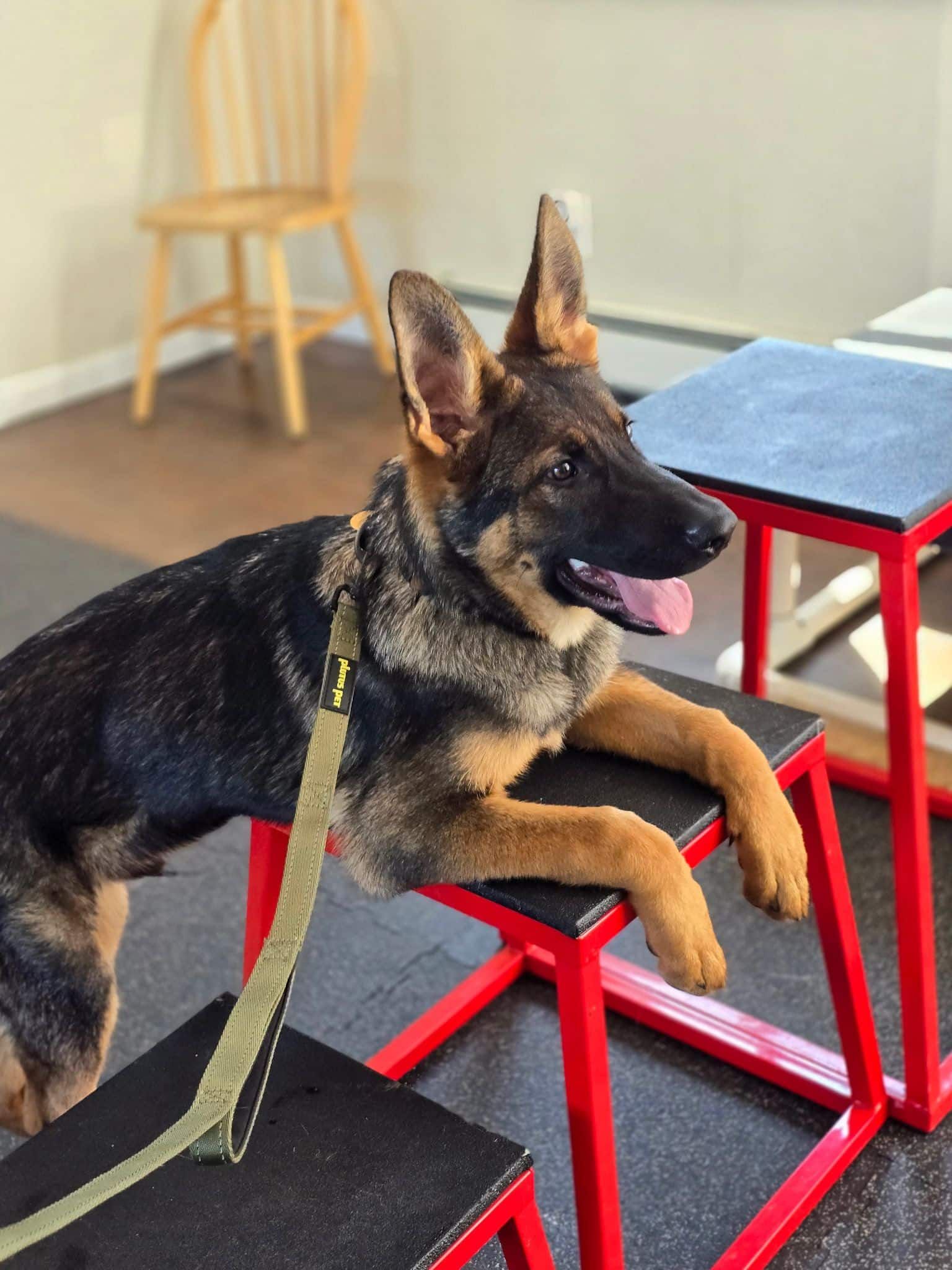
Puppy Training Programs
Training during puppyhood can establish habits that make life easier as your dog grows.
A quality puppy training program should go beyond teaching a puppy to sit. It can introduce your dog to the structure, communication, and expectations they'll need throughout adulthood.
Puppy training may include:
- Crate training
- Housebreaking
- Leash manners
- Basic obedience
- Appropriate socialization
- Managing common puppy behaviors such as chewing and nipping
Starting early can also make it easier to prevent unwanted behaviors before they become established habits.
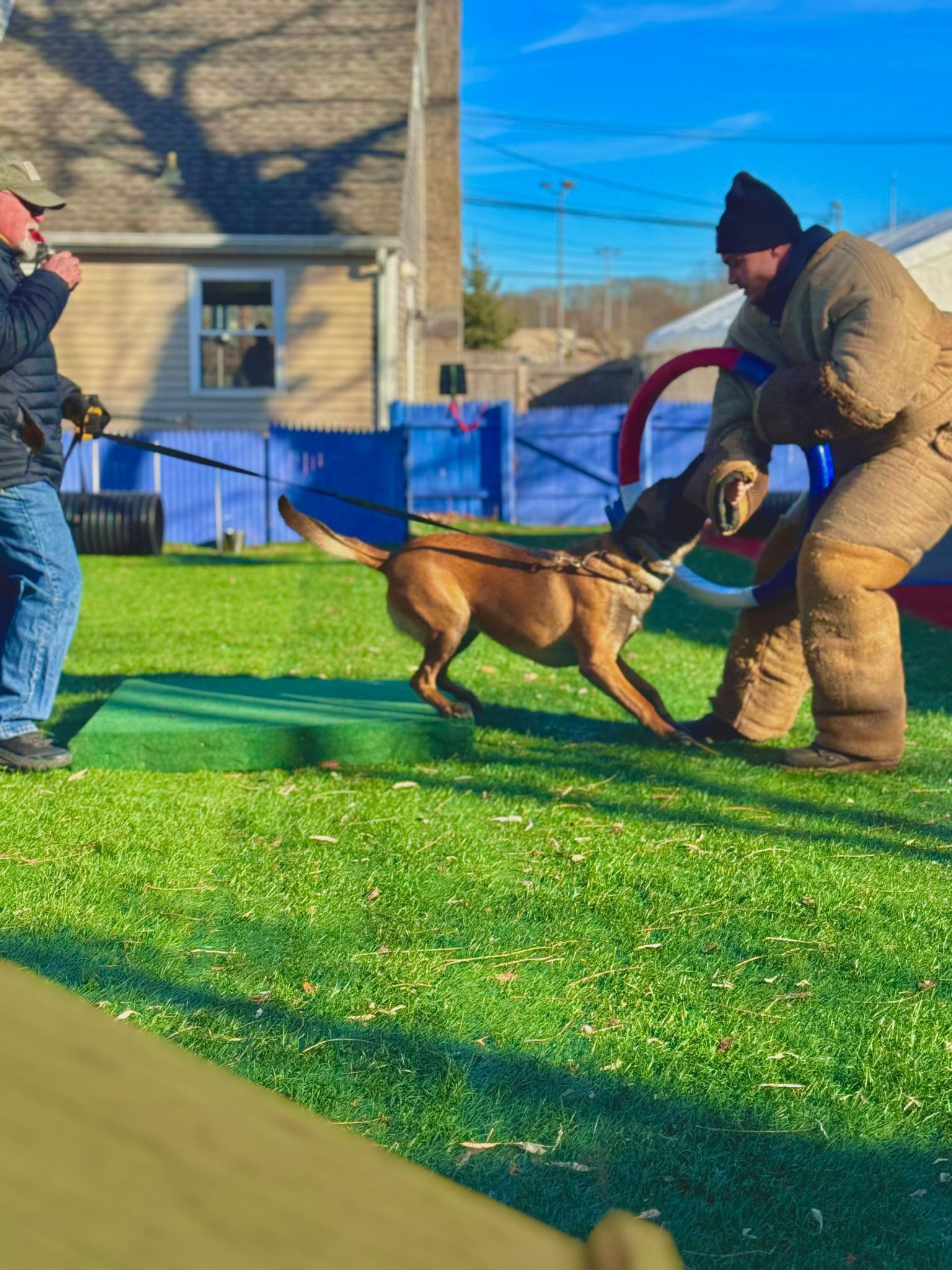
Behavior Modification Training
Some dogs need more than traditional obedience classes.
Dogs dealing with aggression, fear, anxiety, reactivity, or other significant behavioral challenges may benefit from a customized behavior modification program.
In these situations, the first priority should be understanding what is causing or contributing to the behavior. Simply teaching additional commands may not address the underlying problem.
A professional trainer can evaluate the dog's behavior and develop a training plan designed around the specific issue.
Board and Train Programs
A board and train program provides a more immersive training experience. Instead of attending individual lessons, your dog stays at a professional training facility and works consistently with trainers during the program.
This format can be useful for owners who want a highly structured training environment or dogs that need more intensive work.
Board and train may make sense when:
- Your dog needs significant obedience work
- You have limited time for frequent training sessions
- Your dog needs a more structured environment
- You want to accelerate the initial training process
At The K-9 Center, board-and-train is one of several training options available, and dogs are evaluated before a program is recommended. :contentReference[oaicite:2]{index=2}
In-Home Dog Training
Sometimes the behavior you want to address happens primarily at home.
In-home dog training allows training to take place in the environment where the dog actually lives. That can be valuable when dealing with problems such as door manners, household routines, reactions to visitors, or behaviors that aren't easily reproduced inside a training facility.
It can also be convenient for families who prefer personalized instruction without traveling to a training center.
Consider Your Dog's Personality, Not Just the Problem
Two dogs displaying the same unwanted behavior may need completely different approaches.
For example, one dog may pull on the leash because it is highly excited, while another may pull because it is nervous about its surroundings. Treating those dogs exactly the same may not produce the best result.
Age, breed, confidence level, previous training, environment, and temperament can all influence how a dog responds to training.
That's why choosing among different dog training programs should ideally begin with an assessment of the individual dog rather than simply selecting the most convenient class.
Questions to Ask Before Choosing a Dog Training Program
Before enrolling your dog, ask the trainer or facility:
- What type of program do you recommend for my dog's specific needs?
- Do you offer group and private training options?
- How involved will I be in the training process?
- How should I reinforce the training at home?
- Do you have experience with my dog's particular behavior issue?
- What happens if my dog needs additional help after the initial program?
A good trainer should be able to explain not only what they recommend, but why they believe a particular program is appropriate for your dog.
Choosing a Dog Training Program at The K-9 Center
The K-9 Center has served Long Island dog owners for more than 35 years from its Hauppauge location. Training options include puppy training, group obedience classes, private lessons, behavior modification, in-home training, and board-and-train programs. :contentReference[oaicite:3]{index=3}
Rather than expecting owners to choose a program on their own, The K-9 Center offers a free dog training evaluation. The evaluation gives the trainer an opportunity to meet you and your dog, discuss your concerns, evaluate your goals, and recommend an appropriate training plan.
Start With a Free Dog Training Evaluation
If you're unsure which type of training your dog needs, you don't have to make that decision alone.
Contact The K-9 Center in Hauppauge, NY to schedule a free evaluation and learn which training option makes the most sense for your dog, your goals, and your lifestyle.
Call (631) 588-0000 to schedule your free dog training evaluation.