Teaching Your Dog to Stay: Building Duration and Distraction Proofing
Teaching Your Dog to Stay
Teaching your dog to stay is one of the most valuable obedience skills you can develop. Whether you're opening the front door, preparing your dog's dinner, welcoming guests, or walking through a busy Long Island neighborhood, a reliable stay command helps your dog remain calm, focused, and safe.
However, successful stay command training involves more than getting your dog to remain still for a few seconds. A dependable stay requires three important skills: duration, distance, and the ability to remain in position despite distractions.
In this guide, we'll explain how to teach the stay command from the beginning, gradually increase difficulty, avoid common mistakes, and help your dog respond reliably in everyday situations.
Why Is the Stay Command So Important?
A reliable stay is about much more than obedience. It teaches your dog patience, self-control, and the ability to respond to your instructions even when something exciting is happening nearby.
Consider a few everyday situations where stay training can make a difference:
- Opening doors: Preventing your dog from rushing outside when someone enters or leaves.
- Greeting visitors: Helping your dog remain calm instead of jumping on guests.
- Mealtime: Teaching patience while food is being prepared or placed on the floor.
- Public outings: Maintaining control around other dogs, pedestrians, and distractions.
- Safety: Helping prevent your dog from moving toward traffic or another dangerous situation.
Stay training also supports broader obedience skills, including recall, leash manners, and impulse control.
Understanding the Three Foundations of Stay Training
Before beginning, it's important to understand that a reliable stay involves three separate training challenges.
1. Duration: How Long Your Dog Can Stay
Duration training teaches your dog to maintain a position for progressively longer periods.
Initially, your dog might only remain in place for two or three seconds. With consistent practice, that duration can gradually increase to 10 seconds, 30 seconds, a minute, or longer.
The goal isn't to force your dog to remain still for as long as possible. It's to build reliability through achievable repetitions.
2. Distance: How Far You Can Move Away
A dog may stay perfectly when you're standing directly in front of them but immediately follow when you take a step backward.
Distance training teaches your dog that the command remains in effect even when you move away.
This skill should be introduced gradually, beginning with very small movements before progressing to greater distances.
3. Distractions: Staying Focused When Life Happens
Distraction training teaches your dog to maintain a stay when something interesting happens nearby.
That could mean another person walking through the room, a toy moving across the floor, someone ringing the doorbell, or another dog passing at a comfortable distance.
Distractions are often the most challenging part of obedience training because they require your dog to respond to a learned command instead of immediately reacting to the environment.
Important: Work on duration, distance, and distractions separately before combining them. Increasing all three at once can make the exercise unnecessarily difficult.
Step-by-Step: How to Teach Your Dog to Stay
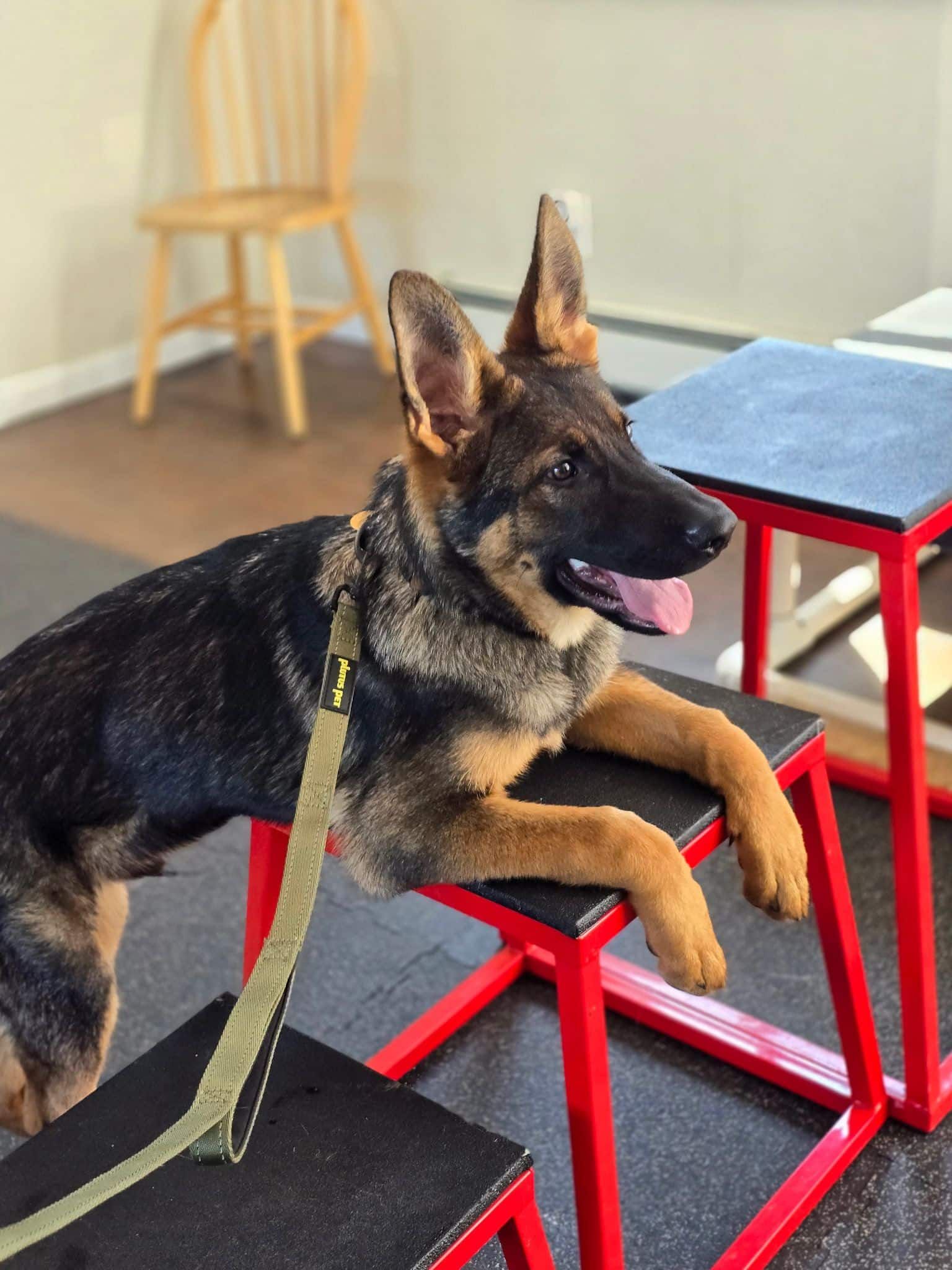
Start in a quiet, familiar environment where your dog can concentrate without competing distractions.
Have small training treats ready, and plan to keep your first few sessions short and positive.
Step 1: Begin With Sit or Down
Ask your dog to sit or lie down in front of you.
For many dogs, the down position is easier to maintain for longer periods, although either position can work.
Make sure your dog understands the starting position before introducing the stay command.
Step 2: Introduce the Stay Cue
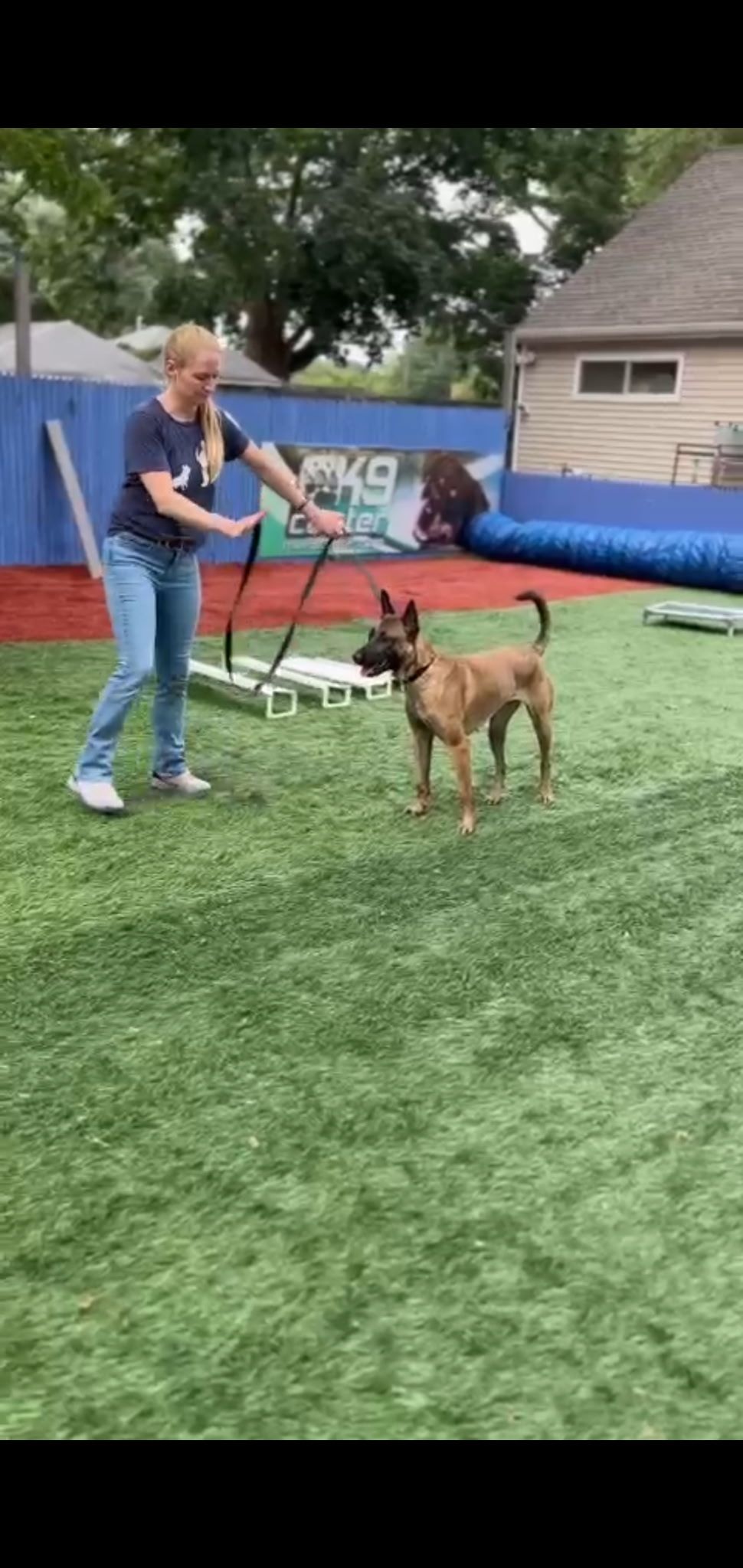
With your dog in position, calmly say "stay."
You can also introduce a consistent hand signal, such as an open palm facing your dog.
Wait approximately one or two seconds. If your dog remains in position, calmly mark the correct behavior with a word such as "yes" and deliver a treat while your dog is still in place.
At this stage, don't step away. Focus entirely on helping your dog understand that remaining in position earns a reward.
Step 3: Introduce a Release Word
A stay command should have a clear beginning and ending.
Choose a release word such as "free," "okay," or "release" and use it consistently.
After rewarding your dog for staying, say your release word and encourage them to move out of position.
This teaches an important distinction: your dog should remain in position until released rather than deciding independently when the exercise is finished.
Step 4: Gradually Increase Duration
Once your dog understands the basic exercise, begin extending the amount of time between the stay cue and the reward.
A simple progression might look like this:
- 2 seconds
- 5 seconds
- 10 seconds
- 15 seconds
- 30 seconds
- 45 seconds
- 60 seconds
These are examples, not deadlines. Some dogs will progress quickly, while others need more repetitions at each stage.
Occasionally reward shorter stays even after your dog has mastered longer ones. This helps keep training manageable and prevents every repetition from becoming increasingly difficult.
Step 5: Add Distance Slowly
When your dog can reliably maintain a short stay, begin introducing distance.
Start by shifting your weight or taking a small step backward. Immediately return to your dog, reward the stay, and release them.
As your dog improves, progress to one full step, two steps, and eventually greater distances.
Initially, keep the duration short when increasing distance. Your dog is learning a new part of the exercise, so make the other parts easier.
Always return to your dog before releasing during these early exercises. This helps prevent the habit of breaking the stay to run toward you.
Step 6: Introduce Controlled Distractions
Once your dog can stay while you move a short distance away, begin practicing with mild distractions.
Start with simple challenges, such as:
- Taking a step to the side
- Walking slowly around your dog
- Moving your arms
- Placing a toy on the floor several feet away
- Having another person walk quietly through the room
Gradually increase difficulty only when your dog is consistently successful.
If your dog breaks position, calmly reset the exercise and reduce the challenge. Avoid scolding or repeatedly saying "stay" in frustration.
How to Practice Stay Around Real-World Distractions
Many dogs perform commands beautifully inside their homes but struggle when they encounter unfamiliar sights, sounds, and smells.
This doesn't necessarily mean your dog has forgotten the command. It often means the behavior hasn't been practiced sufficiently in different environments.
Begin with a quiet backyard or another familiar outdoor area. Then gradually introduce more stimulating locations.
For Long Island dog owners, this might include practicing in a quiet section of a neighborhood park, along a walking path, or in another appropriate public setting where dogs are permitted.
Keep your dog leashed in public areas where required, and choose enough distance from distractions that your dog can remain comfortable and responsive.
A dog that can stay for one minute in the living room may initially manage only a few seconds outdoors. That's normal. Adjust the difficulty to the environment rather than expecting immediate perfection.
Using Place Training to Improve Impulse Control
Place training is another useful obedience exercise that complements the stay command.
With place training, your dog learns to go to a designated location, such as a dog bed or training mat, and remain there until released.
Unlike a traditional sit-stay or down-stay, place training emphasizes remaining within a specific area.
This can be particularly helpful during everyday household activities.
- When guests arrive at the front door
- While family members are eating
- When groceries or deliveries are brought inside
- During household cleaning
- When your dog needs help settling during exciting activities
Begin by rewarding your dog for stepping onto the designated place. Gradually teach them to remain there, building duration and distractions in the same way you would with stay training.
The goal is to create a predictable, comfortable behavior your dog can perform when you need them to settle.
Five Common Stay Training Mistakes
1. Increasing Difficulty Too Quickly
Asking your dog to stay for a full minute while you walk across the room may be too difficult if they have only practiced five-second stays.
Break the exercise into smaller, achievable steps.
2. Repeating the Command Constantly
Repeatedly saying "stay, stay, stay" can make it harder for your dog to understand which cue matters.
Give the cue once, then reward successful behavior and reset when necessary.
3. Forgetting the Release Cue
If your dog doesn't know when a stay ends, they may begin releasing themselves.
Use the same release word consistently so the expectations remain clear.
4. Practicing Only in One Location
A dog that understands stay in the kitchen may not immediately understand the same expectation in a busy park.
Practice in different environments, beginning with easy settings before moving to more challenging ones.
5. Making Every Session Too Long
Long, repetitive sessions can lead to frustration or reduced attention.
Several short sessions throughout the day are often more productive than one extended training session.
A Simple Seven-Day Stay Training Practice Plan
If your dog is just beginning, this example schedule can help organize your first week of practice.
- Day 1: Introduce the stay cue and reward one- to three-second stays.
- Day 2: Practice short stays and consistently use your release word.
- Day 3: Gradually build duration, rewarding your dog while they remain in position.
- Day 4: Introduce small body movements and a single step away.
- Day 5: Practice short stays with mild household distractions.
- Day 6: Practice in another quiet, familiar location.
- Day 7: Review the skills your dog has learned and identify which areas need more practice.
This schedule is a starting point rather than a promise of results. If your dog struggles with a particular stage, spend additional days practicing it before moving forward.
Focus on building reliable behavior rather than completing the schedule as quickly as possible.
Frequently Asked Questions About Stay Command Training
How long does it take to teach a dog to stay?
Many dogs can begin learning a basic stay within a few short sessions. Developing a reliable stay around distractions can take weeks or longer, depending on the dog's experience, temperament, and consistency of practice.
Can puppies learn the stay command?
Yes. Puppies can begin learning short stays once they understand basic positions such as sit or down. Keep sessions brief, reward frequently, and adjust expectations to the puppy's age and attention span.
What should I do if my dog keeps breaking the stay?
Reduce the difficulty. Shorten the duration, move closer to your dog, or remove distractions. Reward successful repetitions and gradually rebuild the skill instead of repeatedly practicing at a level your dog cannot yet manage.
Should I teach stay or place first?
Either can be introduced first. Stay focuses on maintaining a position until released, while place teaches a dog to remain in a designated area. Both exercises can complement one another and improve household manners.
Can older dogs learn to stay?
Absolutely. Dogs of many ages can learn new obedience skills. Older dogs may benefit from shorter sessions and comfortable positions, particularly if they have mobility limitations or other physical concerns.
Build Reliable Obedience Through Consistent Practice
Teaching your dog to stay is a gradual process that rewards patience, consistency, and clear communication.
By developing duration, introducing distance, and carefully practicing around distractions, you can help your dog understand that the command applies in more than one room or situation.
Remember that obedience isn't about expecting perfection immediately. It's about building dependable habits through regular practice and helping your dog understand what you're asking.
Get Professional Dog Obedience Training on Long Island
If your dog struggles with stay, recall, leash manners, or responding around distractions, professional training can help you build a stronger obedience foundation.
At The K-9 Center, we work with Long Island dog owners on essential obedience skills, helping dogs and their families develop clearer communication and more reliable everyday behavior.
Whether you're training a new puppy or working with an adult dog, the right training approach can make practicing at home and in public more productive.
Call The K-9 Center at (631) 588-0000 to discuss your dog's training needs.