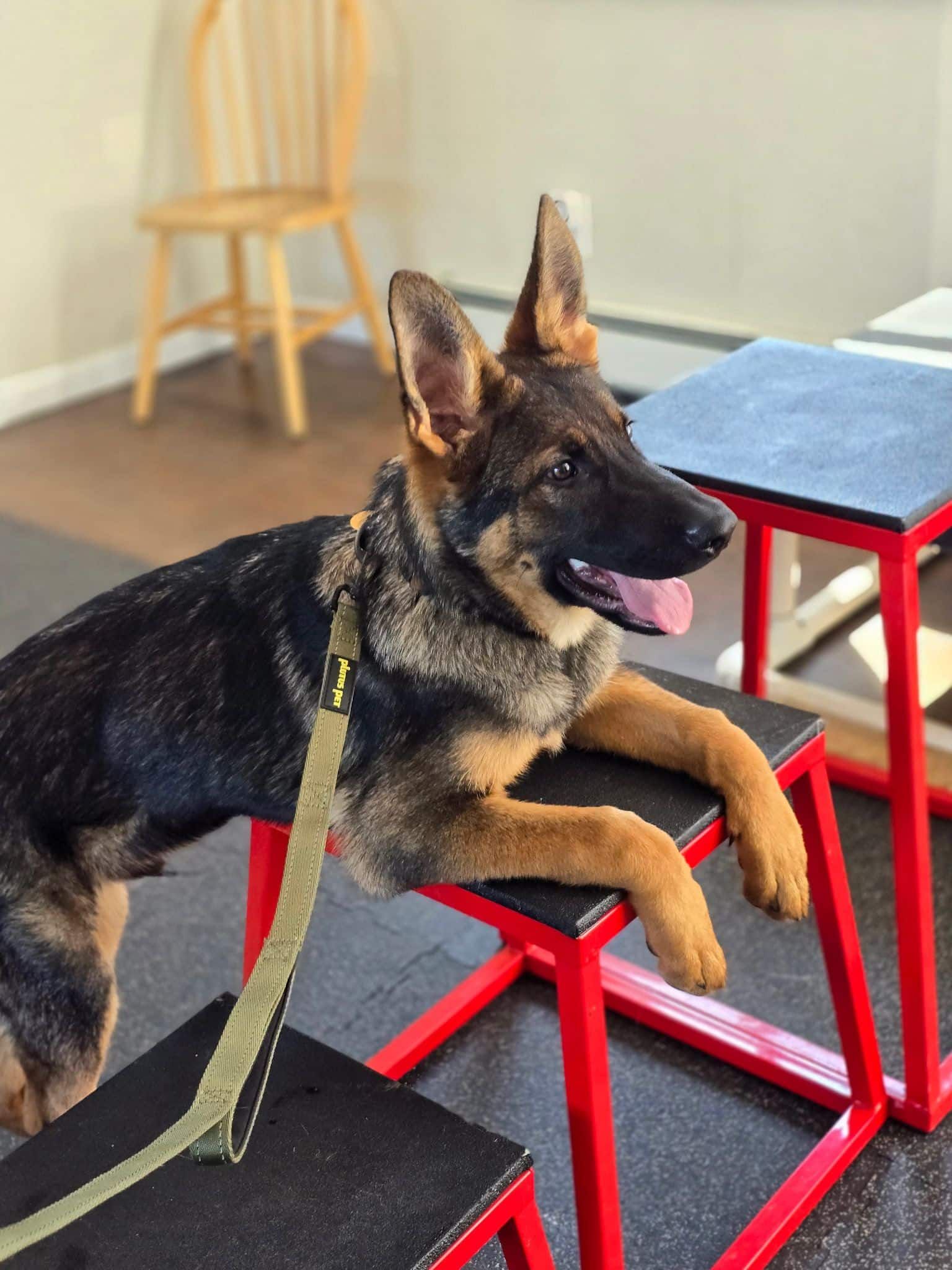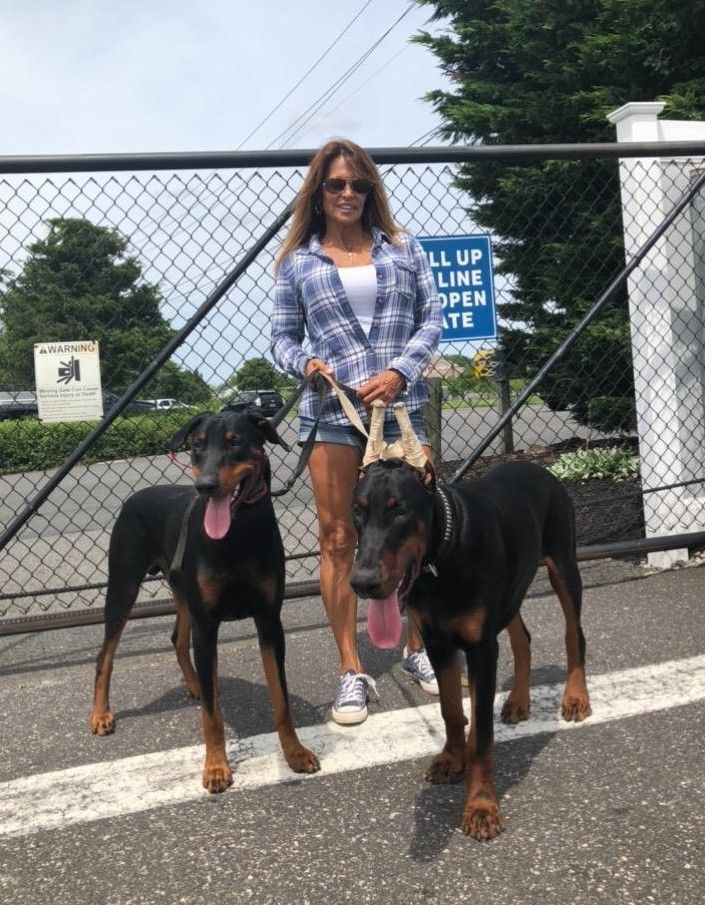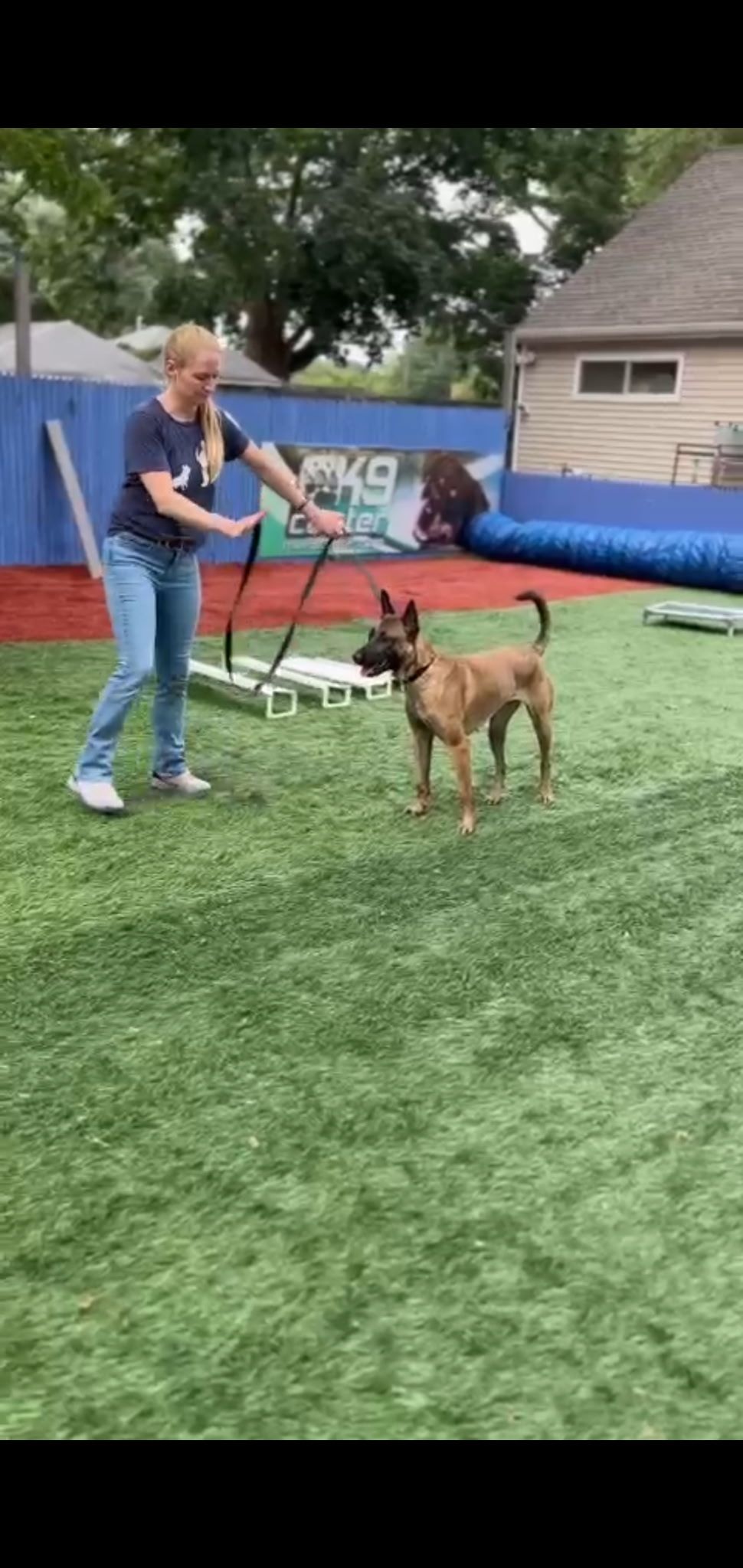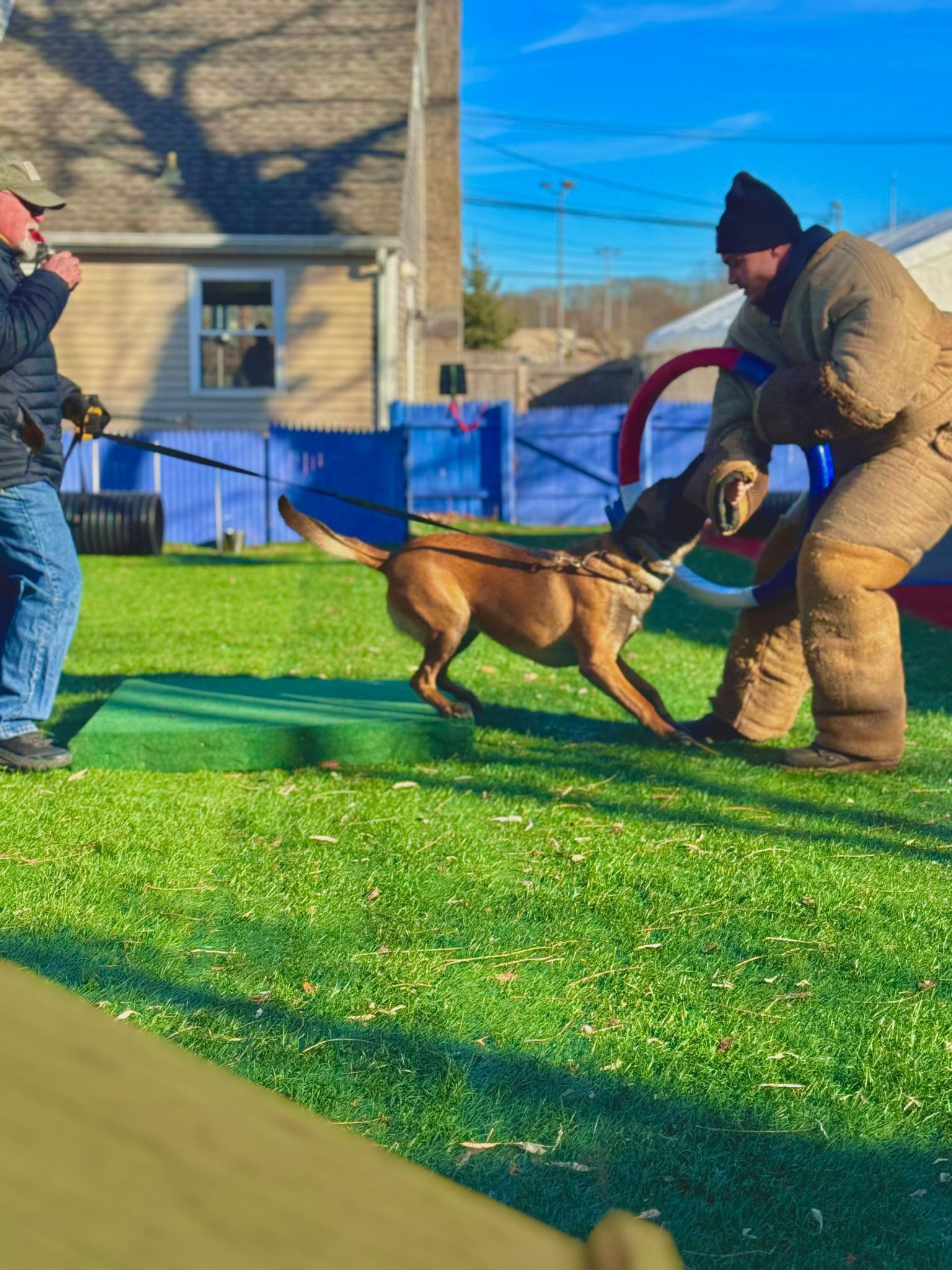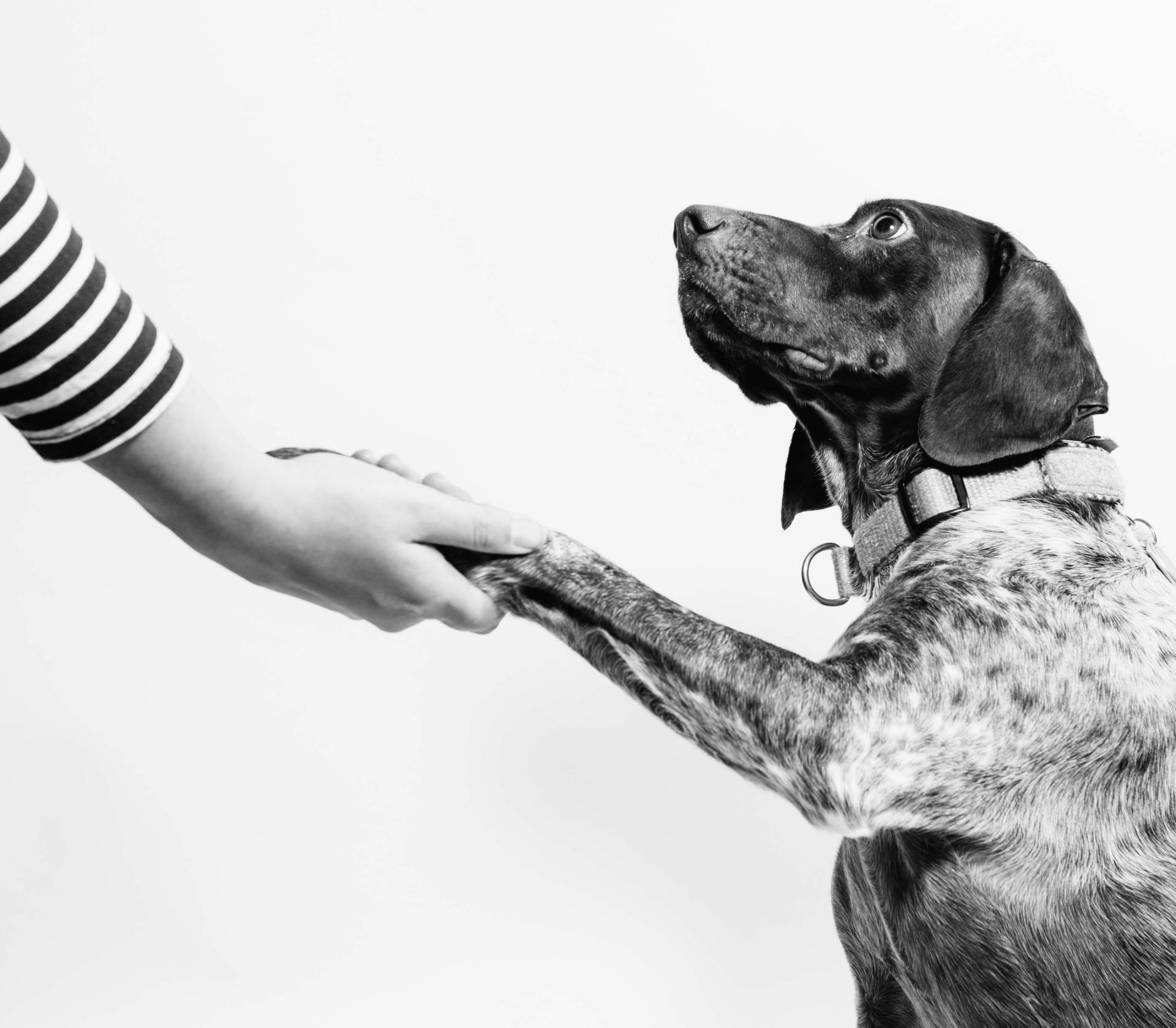
Advanced Off-Leash Training: Freedom with Reliability
Advanced Off-Leash Dog Training on Long Island | The K-9 Center
Picture this: You're hiking through Caleb Smith State Park on a crisp autumn morning. Your German Shepherd trots ahead of you, exploring scents and enjoying complete freedom. When a runner approaches on the trail, you say 'here' and your dog immediately returns to your side, sitting calmly until the runner passes. Then, with a release word, your dog is off again—free but reliable, independent but responsive, exploring but always connected to you.
This is the reality of proper off-leash training. Not the wishful thinking of owners who let their dogs run wild and hope for the best. Not the anxious calling of a dog who might come back or might not. Not the constant tension of watching your dog like a hawk, ready to grab their collar if anything unexpected happens. True off-leash reliability is calm confidence built on rock-solid foundational training, systematic distraction-proofing, and often the precision of modern training tools like e-collars.
At The K-9 Center in Hauppauge, we've been developing reliable off-leash dogs across Suffolk County for over 35 years. Master Trainer John Browne has trained thousands of dogs to advanced off-leash reliability, from working German Shepherds to family Labradors to challenging rescue dogs. The freedom of a truly off-leash reliable dog is one of the most rewarding relationships a Long Island dog owner can experience.
But let's be clear from the start: off-leash training isn't for every dog, every owner, or every situation. It requires serious commitment, appropriate prerequisites, and honest assessment of what you can achieve with your specific dog. This comprehensive guide covers what advanced off-leash training actually involves, what your dog needs before starting, the role of modern training tools, and how to develop the reliability that makes off-leash freedom safe and enjoyable.
What True Off-Leash Reliability Actually Means
The term 'off-leash trained' gets thrown around casually, but genuine off-leash reliability represents a specific standard that most dogs never achieve. Understanding what real off-leash training means helps set proper expectations and goals.
The Off-Leash Reliability Standard
A truly off-leash reliable dog responds to commands with the same consistency whether they're 10 feet or 100 feet away, whether the environment is empty or crowded, whether distractions are minimal or intense. They come when called every time, not just when they feel like it. They stop on command even mid-chase. They stay put despite passing wildlife, other dogs, or interesting smells.
This isn't 'usually comes when called' or 'listens if nothing interesting is happening.' Off-leash reliable means the dog treats your command as an absolute priority regardless of what else is occurring in their environment. This level of reliability is achievable, but it requires months of systematic training and typically professional guidance.
Why 'Pretty Good' Isn't Good Enough
Many Suffolk County dog owners consider their dog 'off-leash trained' when they respond correctly most of the time. This creates dangerous situations. A recall that works 85% of the time means your dog runs into traffic 15% of the time when it matters. A stay that fails when squirrels appear leaves your dog vulnerable when a rabbit crosses their path at Blydenburgh County Park.
The gap between reliable and unreliable off-leash training isn't gradual—it's binary. Either your dog will respond in every situation, or they might not. And the situations where they don't respond are usually the ones that matter most: emergencies, dangerous environments, or high-distraction moments where their safety depends on immediate response.
Benefits of True Off-Leash Freedom
When you achieve genuine off-leash reliability, the benefits transform your relationship with your dog:
- Enhanced exercise opportunities: Off-leash running provides physical exercise leashed walking cannot match
- Mental stimulation: Free exploration engages your dog's brain in ways structured walks don't
- Deeper bond: Choosing to stay with you when free demonstrates and builds relationship strength
- Access to activities: Hiking, beach adventures, camping, and outdoor sports become possible
- Safety in emergencies: Reliable recall might save your dog's life if they escape their collar or yard
- Reduced management: Less physical control required, less exhausting daily interaction
Reality Check: Off-leash training is legally and practically complex on Long Island. Most Suffolk County parks require leashes, and many towns have leash laws that apply even in designated off-leash areas. Off-leash training doesn't mean ignoring leash laws—it means having a reliably trained dog when you're in appropriate off-leash contexts like private property, designated areas, or emergency situations.
Prerequisites: What Your Dog Needs Before Off-Leash Training
Attempting off-leash training without proper foundations is a recipe for failure and potential tragedy. Before pursuing advanced off-leash work, your dog needs specific prerequisite skills solidly in place.
- Rock-Solid Basic Obedience
Your dog must respond reliably to sit, down, stay, come, and heel on-leash before you can consider off-leash work. If your dog ignores commands on-leash, they will absolutely ignore them off-leash. Foundation obedience needs to be automatic, not something your dog thinks about before responding.
- Excellent On-Leash Recall
Before off-leash recall can work, on-leash recall must be perfect. Your dog should come immediately when called on a 20-30 foot long line, in various environments, with moderate distractions. If you can't achieve this on-leash reliability, off-leash reliability is impossible.
- Impulse Control
Your dog must demonstrate the ability to control impulses—waiting at doorways, ignoring distractions on command, resisting temptations. Dogs without impulse control cannot resist the countless temptations they'll encounter off-leash: wildlife, other dogs, interesting smells, or new people.
- Handler Focus
Your dog needs to voluntarily check in with you, orient toward you, and maintain awareness of your location even when doing their own thing. Dogs who tune you out or ignore your presence aren't candidates for off-leash training regardless of their command response.
- Age and Maturity
Serious off-leash training typically begins around 12-18 months minimum, after basic training is solid and your dog has moved through adolescence. Younger dogs lack the impulse control, focus, and reliability that off-leash work demands. Puppies and adolescents belong on leashes or long lines while their foundations develop.
- Appropriate Temperament
Not every dog is a candidate for off-leash training. Dogs with extreme prey drive, dog aggression, human aggression, severe anxiety, or independent temperaments may never achieve safe off-leash reliability. Honest assessment of your dog's temperament is essential. Some dogs are best kept on leashes or long lines forever, and that's perfectly acceptable.
Progressive Off-Leash Training Methodology
Off-leash training progresses through predictable stages, each building on the previous. Skipping stages or rushing progression creates unreliable dogs. Following this methodical approach produces genuine off-leash reliability.
Stage 1: Long Line Foundation
Before your dog is ever truly off-leash, they should master extended long line work. Using 20-30 foot lines, then 50-100 foot lines, allows practice at distance while maintaining safety and control. Every off-leash reliable dog spent months on long lines before earning true freedom.
Practice recall, distance commands, and boundary work with long lines dragging. Your dog experiences freedom while you retain ultimate control if needed. This stage typically requires 2-4 months of consistent work at various Suffolk County locations, gradually increasing distraction levels.
Stage 2: Distance Commands
Off-leash reliability requires commands that work at distance—not just when your dog is next to you. Practice sit, down, stay, and recall at progressively greater distances. Start at 10 feet, build to 20 feet, then 50 feet, then 100+ feet.
This stage often reveals gaps in training that seemed solid up close. Dogs who sit perfectly at your side may ignore the same command at 30 feet. Building distance response takes consistent practice with clear communication and appropriate feedback for both success and failure.
Stage 3: Distraction Proofing
Real-world environments contain countless distractions. Your off-leash training must proof commands against every distraction category your dog might encounter:
- Wildlife (squirrels, rabbits, deer, birds)
- Other dogs (on-leash, off-leash, various sizes and temperaments)
- People (walking, running, biking, various ages)
- Vehicles (cars, trucks, motorcycles, bicycles)
- Environmental novelties (unfamiliar smells, sounds, sights)
- Weather conditions (rain, wind, snow)
- Time of day variations (morning, midday, evening, dusk)
Suffolk County offers excellent variety for distraction proofing. Progress from quiet Hauppauge streets to busier Ronkonkoma areas, from empty Lake Grove parks to crowded weekend locations. Each new environment tests and strengthens your dog's off-leash reliability.
Stage 4: Emergency Response Training
True off-leash reliability includes commands that work in emergencies—when adrenaline surges, chase instincts activate, or threats appear. This requires teaching your dog to respond to specific commands under maximum stress and excitement.
Emergency recall (a distinct command from your regular 'come'), emergency stop, and emergency down provide safety tools for dangerous situations. These commands must be practiced regularly in controlled settings so they're absolutely automatic when your dog is chasing a squirrel toward a road or approaching a threatening situation.
The Role of E-Collar Training in Off-Leash Reliability
Modern e-collar (electronic collar) training is a topic that generates strong opinions. When misused, e-collars cause harm. When used properly by trained professionals, they provide precision communication that dramatically enhances off-leash reliability. At The K-9 Center, we use e-collars thoughtfully as one tool among many, and only when appropriate for the specific dog and training goal.
What Modern E-Collars Actually Are
Today's e-collars bear little resemblance to the harsh 'shock collars' of decades past. Modern professional-grade e-collars offer 100+ stimulation levels ranging from imperceptible to strong, allowing precise communication at whatever level your specific dog perceives. Many dogs respond to stimulation levels so low that humans cannot feel them when tested.
Beyond stimulation, quality e-collars offer vibration and tone options, providing multiple communication channels. The goal isn't punishment—it's clear communication at distance when verbal commands might not carry effectively or when consequences need to be immediate for maximum learning.
When E-Collar Training Is Appropriate
E-collar training is appropriate when:
- Your dog has completed foundational training with traditional methods
- You want to advance to reliable off-leash work
- Your dog is at least 6 months old (many trainers prefer 12+ months)
- A professional will guide proper introduction and use
- You commit to using the tool consistently and correctly
E-collar training is NOT appropriate as a first training approach, a quick fix for behavior problems, a punishment tool, or something to use without professional guidance. Improper e-collar use damages dogs psychologically and can create severe behavioral problems that are difficult to reverse.
Proper E-Collar Introduction
Correct e-collar introduction takes weeks and requires professional guidance. The process involves:
- Collar conditioning: Your dog wears the collar without stimulation for 1-2 weeks, developing positive associations
- Finding perception level: Carefully identifying the lowest level your dog perceives (often barely detectable)
- Pairing with known commands: Using low-level stimulation to reinforce commands your dog already knows well
- Building understanding: Your dog learns to respond to the stimulation as a communication cue
- Advancing distance work: Using the collar for precision communication at distance
- Proofing against distractions: Real-world reliability development
The K-9 Center's e-collar training programs follow this careful protocol. We never use e-collars punitively, and we ensure every dog we train is a good candidate before beginning e-collar work. Many dogs achieve off-leash reliability without e-collars; others benefit enormously from proper e-collar training.
Long Island Locations for Off-Leash Training Practice
Practicing off-leash reliability requires appropriate locations that offer sufficient distraction levels while providing safe environments. Suffolk County offers wonderful options for progressive off-leash training practice.
Controlled Practice Environments
Start off-leash training in controlled environments where you can guarantee your dog's safety:
- Fenced private property: Your backyard or a fenced friend's property offers zero-risk practice
- Fenced sports fields: School athletic fields (during off-hours, with permission)
- Rented training facilities: Professional training facilities that rent fenced space for practice
- Long Island's beaches (off-season): Natural boundaries with ocean on one side, dunes on the other
Suffolk County Parks for Advanced Practice
For advanced off-leash reliability practice (following long line work first), Suffolk County parks offer varying levels of distraction:
- Blydenburgh County Park: Open areas allow distance work while maintaining visibility
- Caleb Smith State Park: Wooded trails with wildlife provide excellent distraction proofing
- Connetquot River State Park: Extensive trails with varied environments
- Cathedral Pines County Park: Wooded areas with moderate wildlife presence
- Brookhaven State Park: Advanced-level distractions for well-trained dogs
Legal note: Most Suffolk County parks require dogs to be leashed. Off-leash training in these locations must be done with a long line, ensuring compliance with local regulations while allowing distance practice. True off-leash freedom should only occur in designated off-leash areas or private property.
Common Off-Leash Training Mistakes to Avoid
Progressing Too Quickly
The biggest off-leash training failure occurs when owners advance faster than their dog is ready for. Your dog performing well on long line at Blydenburgh doesn't mean they're ready for true off-leash freedom at busy Brookhaven State Park. Each new distraction level and environment requires establishing reliability before advancing.
Assuming Universal Reliability
Reliability doesn't transfer automatically between environments and situations. Your dog may be perfectly reliable at your quiet Hauppauge home yet completely unreliable at a crowded Lake Grove park. Off-leash training must be practiced in each environment where you'll expect reliability.
Never Practicing Under Real Conditions
Some owners practice off-leash training only in ideal conditions, then expect reliability during actual challenges. If you've only practiced recall when your dog isn't distracted, you cannot expect recall to work when a rabbit appears. Progressive real-world exposure is essential.
Poisoning the Recall Command
Never call your dog for something unpleasant. If you call your dog to end their fun, put them in the crate, give them medication, or do anything they dislike, you gradually teach them that coming to you is a bad choice. Off-leash reliable dogs come to owners who make coming to them consistently rewarding.
Overusing Commands Without Enforcement
Repeatedly calling your dog when they ignore you teaches them the command is optional. Off-leash reliability requires that every command be enforceable. If you can't ensure a response, don't give the command. Use a long line or e-collar to guarantee response until reliability is established.
Skipping Professional Guidance
Advanced off-leash training benefits enormously from professional guidance. Small errors compound into major reliability failures. Professional trainers spot issues owners miss, adjust protocols in real-time, and ensure safe progression. This is particularly true for e-collar training, where DIY attempts frequently create serious problems.
The K-9 Center's Advanced Off-Leash Training Programs
With 35+ years developing off-leash reliable dogs throughout Suffolk County, The K-9 Center offers comprehensive advanced training programs designed to achieve genuine off-leash success. Master Trainer John Browne's decades of experience with working breeds, family dogs, and challenging cases inform every aspect of our advanced training.
What Our Advanced Programs Include
- Assessment: Honest evaluation of your dog's readiness for advanced training
- Foundation review: Strengthening any weak foundational skills before advancing
- Progressive long line work: Systematic development at increasing distances
- Distraction proofing: Real-world reliability development across Suffolk County environments
- E-collar training (when appropriate): Professional introduction and integration for suitable dogs
- Emergency command training: Safety commands for dangerous situations
- Owner education: Teaching you how to maintain and use your dog's off-leash reliability safely
Who Benefits from Advanced Training
Our advanced off-leash programs are ideal for:
- Owners who want to hike Long Island trails with off-leash freedom
- Beach enthusiasts wanting reliable dogs during coastal adventures
- Rural or estate owners wanting off-leash reliability on their property
- Working breed owners channeling their dogs' capabilities
- Dog sport enthusiasts pursuing agility, obedience competitions, or other activities
- Any owner wanting the safety of emergency-reliable commands
Freedom Through Reliability
Advanced off-leash training represents the pinnacle of dog training achievement. When your dog can move freely through the world while responding reliably to your guidance, you've achieved something remarkable—a partnership built on training, trust, and communication that most dog owners never experience.
This freedom comes at a price: months of dedicated training, honest assessment of your dog's capabilities, willingness to use appropriate tools like e-collars when helpful, and often significant professional guidance. But for the right dogs and committed owners, the investment produces relationships and experiences that transform dog ownership from routine into extraordinary.
At The K-9 Center in Hauppauge, we've helped thousands of Suffolk County dog owners achieve this level of partnership over 35+ years. Our advanced training programs are designed for owners who want more than basic obedience—who envision truly reliable off-leash freedom with their canine companions.
If you're ready to explore advanced off-leash training for your dog, honest professional assessment is the essential first step. Not every dog will succeed at this level, and not every training approach fits every dog. But for suitable candidates, the freedom and partnership possible through proper off-leash training is genuinely life-changing.
Your dog can experience the freedom of exploring Long Island's beautiful outdoors while remaining safely connected to you. That vision is achievable with the right approach, appropriate tools, and expert guidance. The journey from basic obedience to advanced off-leash reliability is challenging but deeply rewarding for both you and your dog.
ADVANCED OFF-LEASH TRAINING FOR LONG ISLAND DOGS
The K-9 Center: Advanced Training Specialists Since 1989
Ready to take your dog's training to the next level? Our advanced off-leash programs combine 35+ years of experience with modern training tools to achieve genuine reliability. From foundation strengthening through e-collar integration, we develop the reliable off-leash companion you envision.
Schedule your free advanced training evaluation today.
Call (631) 588-0000 | Visit thek9center.com/contact
Serving Hauppauge, Ronkonkoma, Lake Grove & all of Suffolk County for 35+ years
About The K-9 Center's Advanced Training Programs
The K-9 Center has developed advanced off-leash reliable dogs throughout Suffolk County for over 35 years. Located in Hauppauge, NY, we specialize in taking dogs beyond basic obedience to achieve the genuine reliability that makes off-leash freedom safe and enjoyable. Our programs serve owners seeking more than typical training—those who envision truly reliable companions capable of advanced work.
Master Trainer John Browne brings decades of experience with working breeds, sport dogs, and family companions. His expertise with advanced training methods, including thoughtful e-collar integration, allows us to develop off-leash reliability for dogs and situations that generic training programs cannot address. We work with German Shepherds, Labradors, Belgian Malinois, and every other breed capable of advanced training.
Whether you're a Hauppauge hiking enthusiast wanting off-leash trail companions, a Ronkonkoma owner with working dogs needing advanced skills, or a Lake Grove family pursuing dog sports, our advanced programs meet you where you are and take you where you want to go. Honest assessment, systematic training, and expert guidance produce the results that make advanced training worth the investment.
Contact The K-9 Center today to discuss advanced off-leash training options for your dog. Freedom with reliability is achievable—we'll help you achieve it.