Training Large Breed Dogs: Special Considerations for Suffolk County Owners
Training Large Breed Dogs: Special Considerations for Suffolk County Owners
There's something undeniably majestic about large breed dogs. Whether it's a regal German Shepherd patrolling your Hauppauge property, a gentle giant Mastiff lounging in your living room, or a powerful Rottweiler confidently walking beside you through downtown Ronkonkoma, big dogs command attention and respect wherever they go.
But with that size comes significant responsibility. A 100-pound dog that jumps, pulls, or exhibits any behavioral problems isn't just inconvenient—it's potentially dangerous. What's merely annoying in a 15-pound terrier becomes a serious safety issue in a large breed. A small dog pulling on the leash is manageable. A Mastiff or Great Dane pulling? That's a recipe for injury.
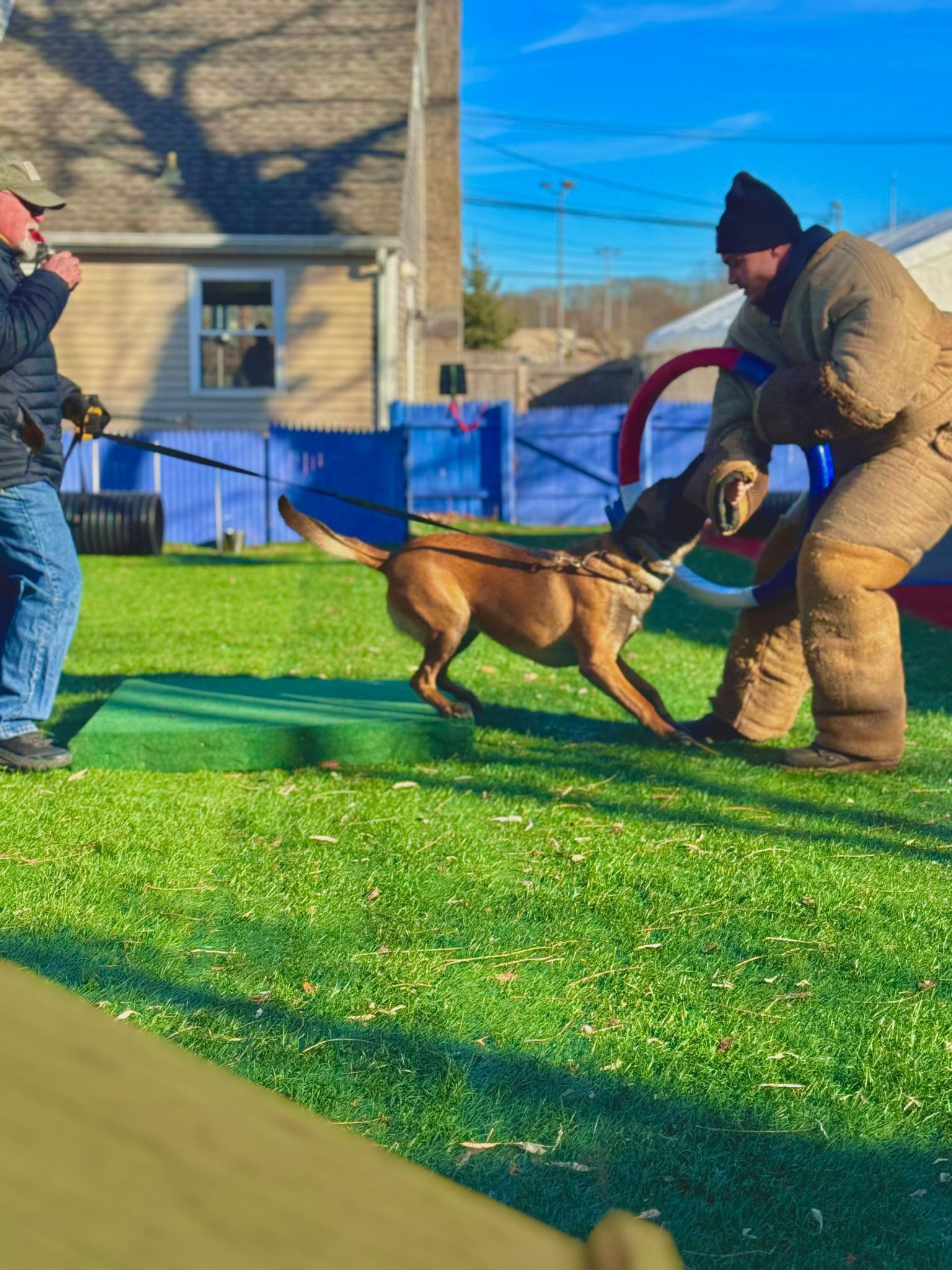
At The K-9 Center, we've spent over 35 years training large breed dogs throughout Suffolk County. From German Shepherds and Rottweilers to Great Danes and Mastiffs, we understand the unique challenges large breed owners face. Master Trainer John Browne has particular expertise with powerful working breeds, and many of our client testimonials specifically highlight our success with large, challenging dogs.
If you're a Long Island large breed owner—whether you're starting with a gangly puppy or managing an untrained adult—this comprehensive guide will help you understand why size matters in dog training and how to effectively train your powerful companion.
Why Size Changes Everything: The Large Breed Training Reality
Training principles remain consistent across all dog sizes, but the stakes, challenges, and methods must be adjusted for large breeds. Here's why training your large breed dog isn't the same as training a Beagle or Cavalier King Charles Spaniel.
Physical Power and Safety Concerns
A poorly trained 120-pound Rottweiler can easily knock down an adult, drag an owner into traffic, or cause serious injury during excited greetings. These aren't theoretical concerns—they're daily realities for owners of untrained large breeds in Suffolk County.
Consider the math: when a 15-pound dog jumps on someone, they're applying roughly 15 pounds of force. When a 100-pound dog jumps, that's 100 pounds of force concentrated on the chest—enough to knock over children, elderly individuals, or anyone caught off-guard. On icy Long Island sidewalks during winter? That becomes a genuine safety hazard.
Similarly, leash pulling transforms from minor annoyance to major problem. A pulling Chihuahua is easily managed. A pulling Mastiff can dislocate shoulders, cause falls, and make walks impossible for many owners. This is why we receive so many calls from Hauppauge families saying their large breed dog has become 'unmanageable'—untrained behaviors that were tolerable when the dog was small have become dangerous as they've grown.
Public Perception and Breed Discrimination
Fair or not, large breed dogs face greater scrutiny than small breeds. A small dog barking or lunging rarely causes alarm. The same behavior from a German Shepherd, Rottweiler, or Pit Bull immediately raises concerns. In Suffolk County neighborhoods, poorly behaved large breeds generate complaints, create liability concerns, and contribute to breed-specific anxiety among neighbors.
Well-trained large breeds, conversely, become ambassadors for their breeds. A calm, obedient Rottweiler walking politely through Lake Grove changes minds about the breed. Your training efforts don't just affect your dog—they influence how your entire community perceives large breeds.
Window of Opportunity: Training Before Full Size
Large breed puppies grow rapidly. That adorable 30-pound German Shepherd puppy you bring home at 8 weeks will reach 75-90 pounds by their first birthday. The gentle 40-pound Great Dane puppy becomes a 150-pound adult in 18 months. This explosive growth means you have a limited window to establish training before your dog reaches full physical power.
Waiting until your large breed is fully grown to address training makes everything exponentially harder. Starting early—ideally at 8-12 weeks—allows you to establish control, good habits, and clear communication before your dog has the physical strength to overpower you.
Veterinary and Health Considerations
Large breeds are more prone to orthopedic issues like hip dysplasia, elbow dysplasia, and arthritis. Training must account for this reality. Excessive jumping, uncontrolled movements, and leash pulling can exacerbate these conditions or cause injury.
Additionally, large breed puppies have longer developmental periods. While a Yorkie reaches skeletal maturity around 10 months, a Great Dane isn't fully mature until 18-24 months. Training protocols—especially regarding exercise intensity and duration—must respect these developmental timelines.
The K-9 Center Expertise: Our client testimonials consistently highlight our success with large, powerful breeds. From 130-pound Great Danes to protective Rottweilers to high-drive German Shepherds, we've trained thousands of large breed dogs throughout Long Island. We understand the unique challenges and have refined our methods specifically for powerful dogs over 35+ years.
Critical Training Priorities for Large Breed Dogs
While all dogs benefit from comprehensive training, these specific behaviors are non-negotiable for large breeds. Failure to master these can result in unmanageable dogs and serious safety issues.
1. Impulse Control: The Foundation of Everything
Large breeds with poor impulse control are dangerous. Teaching your dog to control their excitement, wait patiently, and think before acting is essential. This isn't about suppressing your dog's personality—it's about teaching self-control that keeps everyone safe.
Key impulse control exercises:
- Wait at doorways: Your dog must wait for permission before going through any door. This prevents door-darting and establishes that you control access to exciting things.
- Stay before meals: Food bowl doesn't hit the ground until your dog is calm and waiting. No lunging or jumping for food.
- Leave it: Teaching your large breed to ignore things they want on command prevents countless problems, from eating dangerous items to fixating on other dogs.
- Greeting manners: Your dog must sit and wait for greeting permission rather than jumping on people. This is especially critical for Suffolk County households with children or elderly visitors.
Training tip: Practice impulse control in low-excitement situations first, then gradually increase difficulty. Your German Shepherd that can wait calmly for meals should eventually be able to wait calmly when the doorbell rings.
2. Loose Leash Walking: Mandatory for Safety
A large breed that pulls on leash isn't just annoying—it's a liability. Leash pulling can cause shoulder injuries, falls (especially on icy Hauppauge sidewalks), and makes it impossible for some family members to walk the dog at all.
Loose leash walking must be trained early, before your puppy reaches full strength. A 40-pound adolescent German Shepherd that pulls is still manageable enough to train effectively. That same dog at 85 pounds with an established pulling habit? Much, much harder to fix.
Large breed leash training essentials:
- Use proper equipment: front-clip harnesses or head halters for dogs that pull
- Stop walking the instant the leash tightens—every single time
- Practice in low-distraction environments before attempting busy Suffolk County streets
- Make walks short and focused rather than long and frustrating
- Exercise your dog before training walks to reduce excess energy
3. Reliable Recall: Potentially Life-Saving
A large breed dog that won't come when called is dangerous. Whether your dog slips their collar at a Lake Grove park, escapes from your yard, or encounters a threat, reliable recall is essential for their safety and public safety.
The challenge with large breeds is that many have strong prey drive, protective instincts, or independent streaks that make recall difficult. A Mastiff distracted by a squirrel or a Rottweiler concerned about a stranger requires rock-solid recall training, not casual practice.
Building bulletproof recall:
- Start indoors with zero distractions
- Use extremely high-value rewards (real meat, not kibble)
- Practice 10-15 times daily in various locations
- Never call your dog for something unpleasant
- Gradually increase distance and distractions over months
- Practice around other dogs, people, and wildlife at Long Island parks
- Use a long line (20-30 feet) during training for safety
4. No Jumping: Zero Tolerance Policy
Large breed dogs cannot jump on people. Period. What's cute from a puppy becomes dangerous from an adult. A 120-pound dog jumping enthusiastically on a child, elderly person, or anyone unprepared can cause serious injuries.
This behavior must have zero tolerance from day one. Never allow your large breed puppy to jump, even if it's cute now. Teaching 'off' and rewarding four-on-the-floor from the beginning prevents this problem entirely.
No-jump training protocol:
- Turn away and ignore any jumping—no attention whatsoever
- Reward sitting or standing with four feet on floor
- Practice with volunteers of different ages and sizes
- Never allow guests to pet your dog when they're jumping
- Be absolutely consistent—one successful jump reinforces the behavior
5. Solid Stay/Place Command
Teaching your large breed to go to a specific spot and stay there on command is invaluable for managing daily life in Suffolk County homes. When the doorbell rings, your dog goes to their place rather than rushing the door. When guests arrive, your dog stays on their bed rather than overwhelming visitors.
This command provides structure, teaches self-control, and gives you a management tool for situations where your large breed's enthusiasm or protectiveness might otherwise be problematic.
Essential Equipment for Large Breed Training
The right equipment makes large breed training safer and more effective. Using equipment designed for small dogs on a powerful breed is both ineffective and dangerous.
Training Collars and Harnesses
Front-clip harness: Our top recommendation for most large breed dogs during training. When they pull, it redirects them back toward you rather than rewarding forward momentum. Look for heavy-duty models rated for your dog's weight.
Head halter: Extremely effective for powerful pullers like Mastiffs, Great Danes, or strong Rottweilers. Provides control of the head, making it easier to direct your dog. Requires proper introduction and acclimation.
Martingale collar: Limited-slip collar that provides gentle feedback without choking. Good for well-trained large breeds that need minimal correction.
Avoid: Standard buckle collars for powerful pullers (no control), retractable leashes (teach pulling), and choke chains (can damage trachea).
Leashes and Long Lines
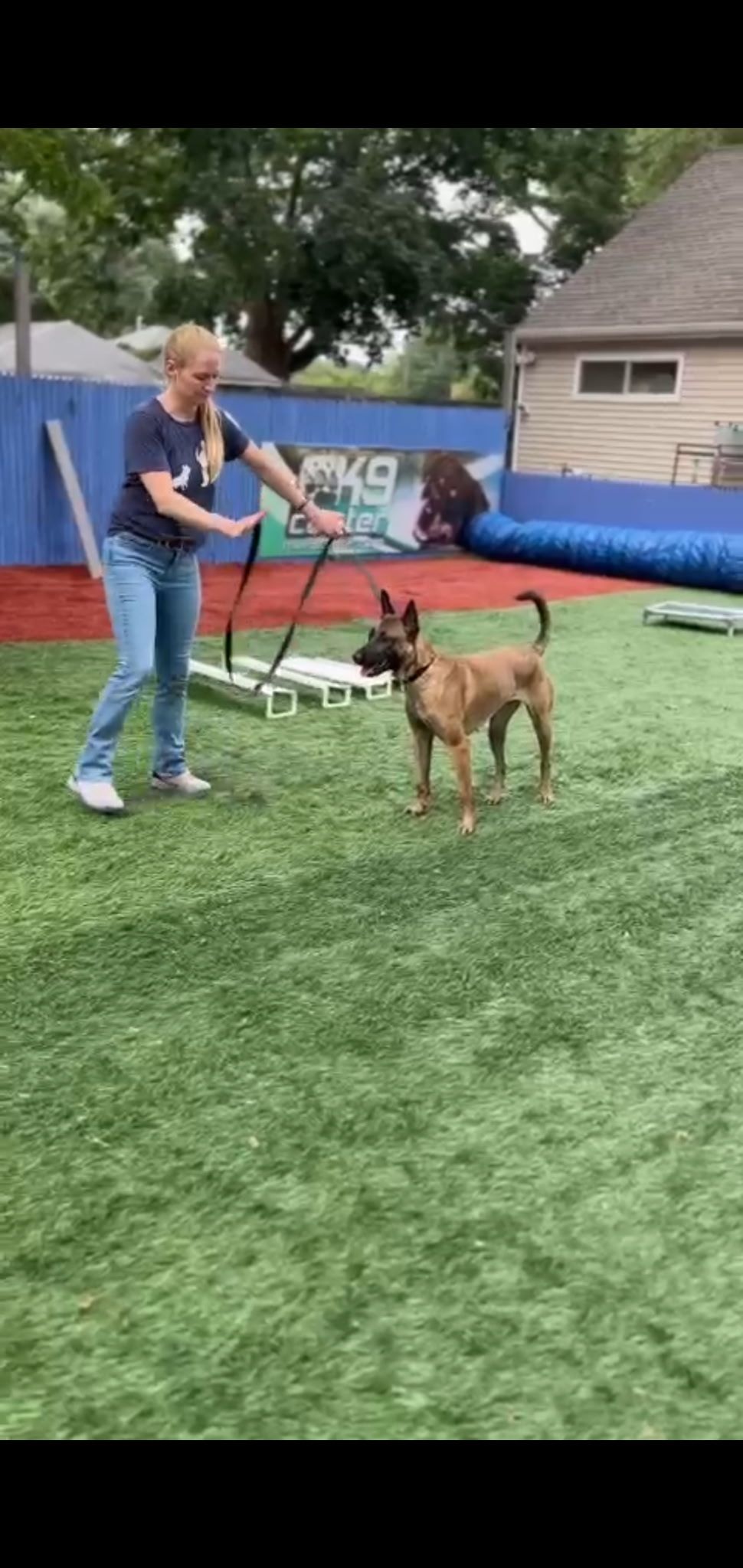
Use a 6-foot leather or heavy-duty nylon leash for training. Leather provides better grip and durability for large breeds. For recall training, invest in a 20-30 foot long line that allows distance practice while maintaining safety.
Crates and Confinement
Large breed dogs need appropriately sized crates—big enough to stand, turn around, and lie down comfortably, but not so large they can eliminate in one corner and sleep in another. Heavy-duty construction is essential; many large breeds can break flimsy crates.
Common Large Breed Training Challenges in Suffolk County
Based on our 35+ years training large breeds throughout Long Island, these are the most frequent challenges owners face and our proven solutions.
- "My dog was manageable as a puppy but is out of control now"
The Problem: You tolerated pulling, jumping, and general rowdiness when your dog was 40 pounds. Now they're 90 pounds and those behaviors are dangerous.
The Solution: Go back to basics. Treat your adult dog like a puppy in training—high-value rewards, short sessions, low distractions. Professional training is highly recommended at this stage because bad habits are deeply ingrained.
2. "My large breed is too strong for me to control"
The Problem: You physically cannot hold your dog when they pull toward something. Walks are impossible, and you're considering rehoming.
The Solution: This is a management and training crisis. Immediately switch to a front-clip harness or head halter. Stop all walks in high-distraction areas until you rebuild foundation training. Professional help is essential—The K-9 Center specializes in exactly this situation.
3. "My dog is protective/reactive and I'm worried about liability"
The Problem: Your German Shepherd or Rottweiler barks aggressively at strangers, lunges at other dogs, or shows concerning protective behavior. You're worried about lawsuits or someone getting hurt.
The Solution: This requires immediate professional intervention. Protective or aggressive behavior in large breeds is a serious liability. We can assess whether the behavior is fear-based, territorial, or genuine aggression, then implement appropriate behavior modification protocols.
4. "Different family members get different behavior"
The Problem: Your large breed obeys your husband but ignores your teenage daughter. Or listens to mom but walks all over dad.
The Solution: Large breeds quickly learn who enforces rules and who doesn't. Everyone must use identical commands, enforce identical standards, and follow through consistently. Family training sessions where everyone practices together are essential.
4. "My dog is destructive when left alone"
The Problem: Your Mastiff destroys furniture, your German Shepherd digs through doors, or your Great Dane tears apart your Hauppauge home when you're at work.
The Solution: Large breeds have substantial exercise and mental stimulation needs. A morning run or training session before work, combined with puzzle toys and appropriate chews during alone time, usually solves this. Crate training may be necessary for destructive dogs.
Breed-Specific Training Considerations for Large Dogs
While training fundamentals remain consistent, different large breeds present unique challenges. Here's what we see frequently at The K-9 Center with popular Long Island large breeds.
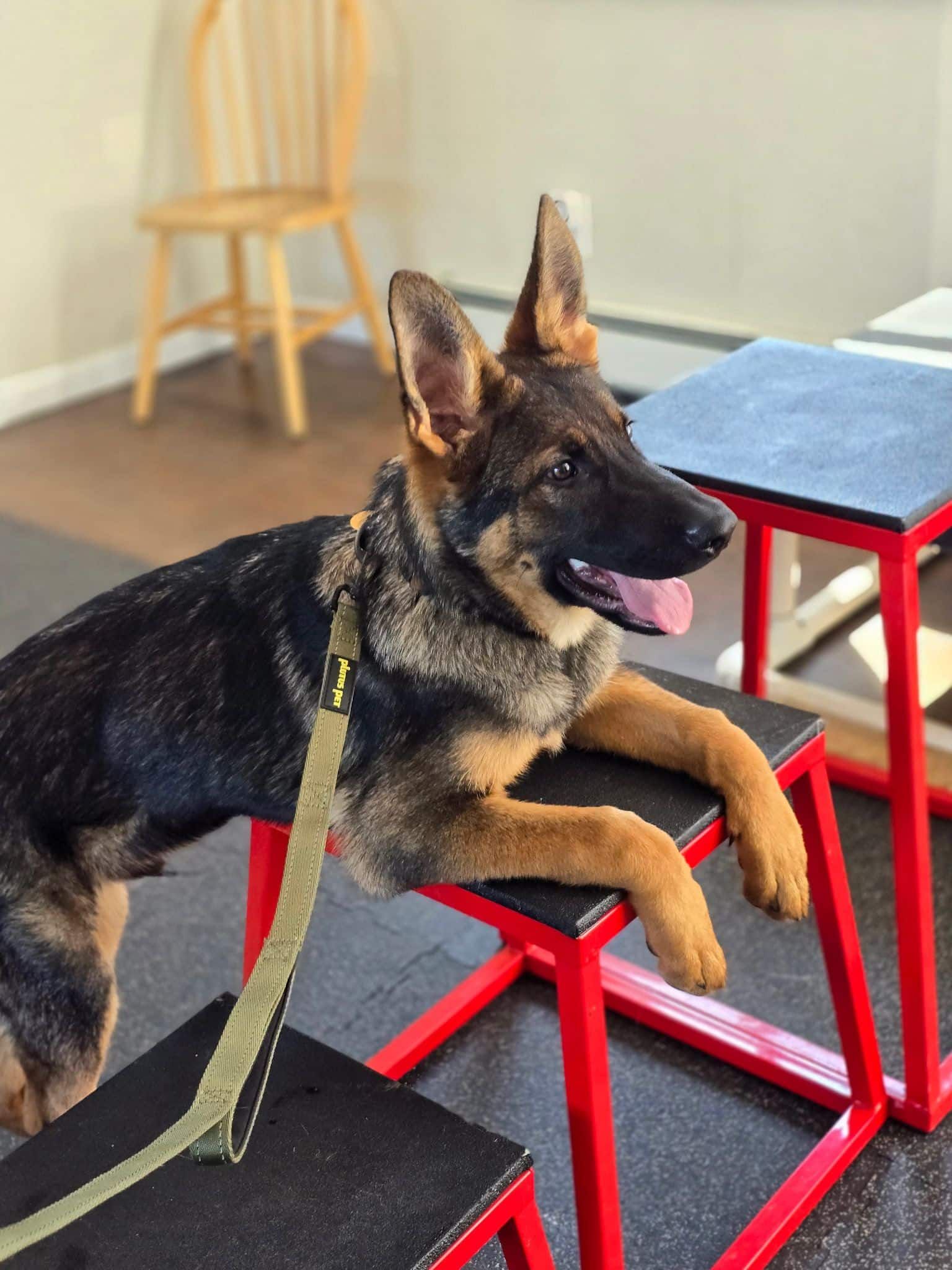
German Shepherds
Characteristics: Highly intelligent, intense, protective, and energetic. Strong work drive and handler focus.
Training focus: Channel their work drive into training. Need substantial mental challenges. Manage protective instincts through socialization and confidence building. Excel in advanced obedience and dog sports.
Rottweilers
Characteristics: Confident, powerful, naturally protective. Strong guardian instincts and calm temperament when well-bred.
Training focus: Early socialization is critical. Teach appropriate discrimination between threats and normal situations. Need clear leadership without harsh corrections. Physical control through proper equipment until trained.
Mastiffs (English, Bull, Neapolitan)
Characteristics: Massive size (150-200+ pounds), calm temperament, stubborn streak. Natural guardians but typically gentle.
Training focus: Start extremely early before they're too large to manage. Keep sessions short—they tire easily. Use food motivation heavily. Focus on impulse control and loose leash walking as top priorities. Head halters often necessary.
Great Danes
Characteristics: Giant size (140-180 pounds) with extended puppyhood. Friendly, goofy, sometimes anxious. Can be clumsy and unaware of their size.
Training focus: No jumping is absolutely critical—they can literally knock people unconscious. Teach spatial awareness and calm behavior around people. Exercise caution during growth period to protect developing joints.
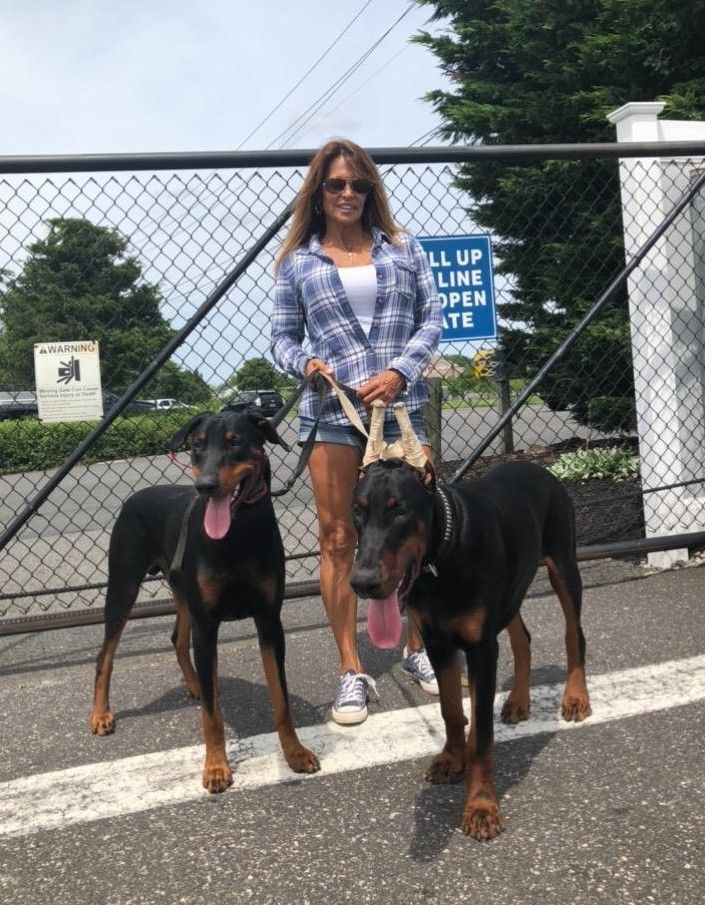
Doberman Pinschers
Characteristics: Athletic, intelligent, high-energy. Very handler-focused and responsive. Can be sensitive.
Training focus: Need substantial exercise before training. Excel in advanced obedience and sports. Avoid harsh corrections—they're sensitive despite tough appearance. Channel their energy into structured work.
Large Breed Training Timeline: Age-Appropriate Expectations
Large breeds develop more slowly than small breeds, and training must respect their developmental stages.
8-16 Weeks: Foundation and Socialization
Critical period for socialization. Expose your puppy to dozens of people, dogs, environments, and experiences. Focus on positive associations, not formal obedience. Teach name recognition, basic house training, and gentle handling. Keep training sessions short (5 minutes) and fun.
4-6 Months: Building Obedience Foundation
Your puppy is larger and stronger but still manageable. This is your window to establish solid obedience before they're too powerful. Teach sit, down, stay, come, and loose leash walking. Manage mouthy behavior and jumping immediately. Enroll in puppy obedience classes at The K-9 Center or similar Suffolk County programs.
6-12 Months: The Awkward Adolescence
Your dog looks adult-sized but behaves like a teenager. Expect regression, testing boundaries, and selective hearing. This is when many Hauppauge owners contact us saying their dog has 'suddenly' become unmanageable. Maintain consistency, increase training difficulty gradually, and don't allow behaviors you won't accept in the adult dog.
12-24 Months: Reinforcement and Advanced Work
Your large breed reaches physical maturity (though giant breeds take longer). Reinforce all foundation training. This is the time to add advanced obedience, off-leash work, or dog sports. Well-trained large breeds should be reliable in most situations by 18-24 months.
Exercise Requirements for Large Breed Dogs in Suffolk County
Proper exercise is essential for training success. A physically and mentally exhausted large breed learns better, focuses longer, and exhibits fewer behavioral problems.
Daily Exercise Minimums
- Working breeds (GSDs, Rottweilers, Dobermans): 60-90 minutes of vigorous exercise daily
- Giant breeds (Mastiffs, Great Danes): 45-60 minutes moderate exercise—avoid excessive stress on joints
- Puppies: 5 minutes per month of age, twice daily (e.g., 4-month-old gets 20-minute sessions twice daily)
Great Long Island locations for large breed exercise:
- Blydenburgh County Park (Smithtown) - extensive trails
- Caleb Smith State Park - wooded paths perfect for large dogs
- Cathedral Pines County Park - quiet trails
- Brookhaven State Park - open areas for running
- Dog-friendly Long Island beaches (off-season) - swimming is excellent low-impact exercise
Why Professional Training Is Essential for Large Breeds
While any dog benefits from professional training, large breeds make it a necessity rather than a luxury. The stakes are simply too high to rely solely on YouTube videos and generic advice.
What Professional Large Breed Training Provides
- Size-appropriate techniques: Methods that work for teaching a Chihuahua don't necessarily work for a Mastiff. We tailor our approach to your dog's size and strength.
- Safety protocols: Learning to safely manage a powerful dog during training prevents injuries to you, your dog, and others.
- Problem prevention: Identifying potential issues before they become serious problems. A trainer can spot concerning behaviors that owners often miss.
- Proper equipment guidance: Knowing which harness, collar, or training tool is right for your specific dog and situation.
- Accountability and consistency: Weekly classes keep you on track when life gets busy.
The K-9 Center's Large Breed Training Programs
At The K-9 Center in Hauppauge, we've trained thousands of large breed dogs over 35+ years. Our client testimonials specifically highlight our expertise with powerful breeds—German Shepherds, Rottweilers, Mastiffs, Great Danes, and others.
Our programs include:
- Large Breed Puppy Foundation: Early training before your puppy becomes too large to manage easily
- Basic and Advanced Obedience: From foundational commands through off-leash reliability
- Behavior Modification: Addressing pulling, jumping, reactivity, and aggression
- Private Training: One-on-one sessions for dogs with specific challenges or owners who need individualized attention
- Board and Train: Intensive programs for serious behavioral issues or accelerated training
Master Trainer John Browne has particular expertise with large, powerful working breeds and has been training dogs in Suffolk County since 1989. We understand the unique challenges Long Island large breed owners face and provide practical, effective solutions.
Large Breed Dogs: Power with Responsibility
Owning a large breed dog is a significant responsibility. These dogs have the physical power to cause serious harm if untrained, but with proper training, they become gentle, obedient, and wonderful companions. The difference between a well-trained and poorly trained large breed isn't just quality of life—it's safety, liability, and often the difference between keeping your dog or rehoming them.
Training your large breed dog requires commitment, consistency, and often professional guidance. But the investment pays dividends every single day. A well-trained 100-pound dog is easier to live with than an untrained 30-pound dog. They walk politely through downtown Hauppauge, greet visitors appropriately, and respond reliably to commands regardless of distractions.
Whether you're starting with a gangly German Shepherd puppy, managing an adolescent Mastiff, or addressing behavioral issues with an adult Rottweiler, professional training makes the difference between struggle and success. At The K-9 Center, we specialize in exactly these challenges and have helped thousands of Suffolk County large breed owners develop the trained, reliable companions they envisioned when they brought their dog home.
Don't wait until your large breed dog is unmanageable. Start training early, stay consistent, and get professional help when needed. Your dog deserves the chance to reach their full potential, and you deserve to enjoy your large breed companion safely and confidently.
LARGE BREED DOG TRAINING EXPERTS ON LONG ISLAND
The K-9 Center: Specializing in Powerful Breeds Since 1989
Our testimonials consistently highlight our expertise with large, powerful dogs. From German Shepherds and Rottweilers to Mastiffs and Great Danes, we've trained thousands of large breed dogs throughout Suffolk County. Whether you need puppy foundation training or adult behavior modification, we provide proven solutions.
Schedule your free large breed training evaluation today.
Call (631) 588-0000 | Visit thek9center.com
Serving Hauppauge, Ronkonkoma, Lake Grove & all of Suffolk County for 35+ years
Related Training Resources
- German Shepherd Training: What Makes This Breed Unique in Suffolk County
- How to Stop Your Dog from Pulling on the Leash: A Step-by-Step Guide
- 10 Essential Commands Every Long Island Dog Owner Should Teach Their Puppy
- Rottweiler Training: Developing Confidence in a Guardian Breed
- The Truth About Dog Aggression: Types, Triggers, and Training Solutions
About The K-9 Center's Large Breed Training Program
The K-9 Center has been Suffolk County's trusted training facility for large breed dogs for over 35 years. Located in Hauppauge, NY, we serve families throughout Long Island who own German Shepherds, Rottweilers, Mastiffs, Great Danes, Dobermans, and other powerful breeds.
Master Trainer John Browne specializes in large breed training and has extensive experience with powerful working dogs. Our client testimonials consistently highlight our ability to transform unmanageable large breed dogs into well-trained, reliable companions. We understand that large breeds require specialized knowledge, proper equipment, and techniques appropriate for their size and strength.
Whether you're starting with a large breed puppy, navigating adolescence with a powerful teenager, or addressing behavioral challenges with an adult dog, we provide the expertise and support you need. Our programs are designed specifically for the unique challenges large breed owners face, combining effective training methods with practical management strategies.
Contact The K-9 Center today to discuss your large breed dog's training needs. Let us help you develop the trained, trustworthy companion you envisioned.