The Role of Exercise in Dog Training Success | The K-9 Center Long Island
The Role of Exercise in Dog Training Success
There's an old saying among professional dog trainers: 'A tired dog is a good dog.' At The K-9 Center in Hauppauge, we've found this to be one of the most important truths in dog training. After 35+ years working with thousands of dogs across Suffolk County, we can confidently say that exercise isn't just beneficial for training—it's often the missing ingredient that determines whether training succeeds or fails.
Many Long Island dog owners contact us frustrated that their training efforts aren't working. They've been consistent. They've used positive reinforcement. They've practiced commands daily. Yet their dog still pulls on the leash, jumps on guests, can't focus, and seems impossible to train. When we visit their homes or meet at our Hauppauge facility, the issue often becomes obvious within minutes: the dog isn't getting nearly enough exercise.
Exercise and training aren't separate concerns—they're deeply interconnected pillars of canine wellness. A properly exercised dog learns faster, focuses better, retains training more reliably, and exhibits fewer behavioral problems. Conversely, an under-exercised dog struggles with virtually every aspect of training, regardless of how skilled the trainer or how consistent the owner.
In this comprehensive guide, we'll explore exactly how exercise impacts training success, how much exercise different dogs actually need, the critical role of mental stimulation, and how Suffolk County owners can incorporate effective exercise routines that transform their training results.
Why Exercise Is Essential for Training Success
Exercise affects training success through multiple interconnected mechanisms. Understanding these connections helps explain why under-exercised dogs are so difficult to train and why properly exercised dogs respond so much more effectively.
Excess Energy Equals Poor Focus
Try learning a new skill while running on a treadmill. Imagine taking an important exam while feeling like you've consumed five cups of coffee with nowhere to release that energy. This is essentially what we ask of dogs when we attempt training without adequate exercise first.
Dogs with pent-up energy physically cannot focus on training. Their bodies demand movement. Their brains struggle to concentrate. Their attention scatters to every distraction. You can practice 'sit' a hundred times, but if your German Shepherd hasn't burned off their morning energy, the training won't stick. Hauppauge owners often discover that 30 minutes of vigorous exercise before training sessions produces better results than two hours of attempted training with an unexercised dog.
Exercise Reduces Behavioral Problems
A huge percentage of behavioral problems we see at The K-9 Center stem from insufficient exercise. Destructive chewing, excessive barking, hyperactivity, jumping, leash pulling, digging, escape attempts, and even some forms of aggression often have inadequate exercise as a root cause.
These behaviors aren't 'bad behavior'—they're symptoms of an unmet need. When dogs lack appropriate outlets for their physical energy, they create their own outlets through behaviors we find problematic. Solving these behavioral issues sometimes requires nothing more than adequate daily exercise. When energy levels drop into a healthy range, problem behaviors often diminish dramatically without any specific training intervention.
Physical Activity Builds Brain Health
Research has consistently shown that physical exercise improves cognitive function in both humans and dogs. Exercise increases blood flow to the brain, stimulates neurogenesis (the creation of new neurons), and releases neurotransmitters that improve mood and learning ability.
This means that a dog who exercises regularly is literally better equipped neurologically to learn new behaviors and retain training. The connection between physical activity and learning capacity is so strong that we recommend pre-training exercise as standard practice for virtually every dog we work with in Suffolk County.
Exercise Strengthens the Owner-Dog Bond
Active exercise—particularly activities you do together like walking, hiking, fetch, or training games—builds the relationship that effective training depends on. Your dog learns that good things happen when they're with you. They develop better attentiveness, stronger handler focus, and more reliable responsiveness to your cues.
This relationship building is particularly important for working breeds like German Shepherds, Rottweilers, and other breeds we frequently train at The K-9 Center. These dogs were bred to work alongside humans, and exercise activities that involve cooperation strengthen the partnership essential for advanced training.
Tired Dogs Make Better Students
Beyond reducing excess energy, exercised dogs simply learn better. They're more receptive to new information, more patient through repetitions, and more capable of generalizing learned behaviors to different contexts. A 30-minute training session with an exercised dog often accomplishes more than two hours with an under-exercised one.
This is why successful Hauppauge dog owners often establish routines where exercise precedes training. Morning walk or play session, then training. Afternoon exercise, then practice. Evening activity, then short reinforcement sessions. This pattern dramatically accelerates training progress.
The K-9 Center Insight: If you're frustrated that training isn't working despite consistent effort, examine your dog's daily exercise routine before changing your training approach. In our experience, exercise is the single most overlooked factor in training failure—and the easiest one to fix.
How Much Exercise Does Your Dog Actually Need?
Exercise requirements vary significantly based on breed, age, health, and individual temperament. Understanding your specific dog's needs helps you provide appropriate physical activity that supports training success.
Exercise Requirements by Breed Category
Working and Herding Breeds (German Shepherds, Border Collies, Australian Shepherds, Rottweilers):
- Daily minimum: 60-90 minutes of vigorous exercise
- Plus 30-60 minutes of mental stimulation
- Best activities: Running, hiking, agility, structured training, dog sports
Sporting Breeds (Labradors, Golden Retrievers, Pointers, Spaniels):
- Daily minimum: 60-90 minutes of moderate to vigorous exercise
- Best activities: Swimming, fetch, hiking, retrieving games
- Suffolk County advantage: Numerous lakes and beaches for swimming opportunities
Hound Breeds (Beagles, Basset Hounds, Bloodhounds):
- Daily minimum: 45-60 minutes of moderate exercise
- Best activities: Long walks with sniffing opportunities, scent work, tracking
- Important: Mental stimulation through sniffing is essential for these breeds
Giant Breeds (Mastiffs, Great Danes, Saint Bernards):
- Daily minimum: 45-60 minutes of moderate exercise
- Important: Avoid high-impact exercise that stresses joints
- Best activities: Long leisurely walks, swimming, gentle play
Small and Toy Breeds (Chihuahuas, Yorkies, Pomeranians):
- Daily minimum: 30-45 minutes of moderate exercise
- Best activities: Walks, indoor play, short training sessions
- Common mistake: Underestimating exercise needs because of small size
Brachycephalic Breeds (Bulldogs, Pugs, French Bulldogs):
- Daily minimum: 30-45 minutes of LOW-intensity exercise
- Critical: Avoid hot weather and overexertion due to breathing issues
- Best activities: Short walks, indoor games, mental stimulation
Exercise Requirements by Age
Puppies (8 weeks - 6 months):
- Rule of thumb: 5 minutes per month of age, twice daily
- Example: 4-month-old puppy = 20-minute sessions twice daily
- Avoid: Forced exercise, long runs, jumping from heights
- Focus: Mental stimulation, socialization, gentle play
Adolescent Dogs (6 months - 2 years):
- Peak energy period requiring substantial daily exercise
- Often need more exercise than adult dogs of same breed
- Combine physical and mental challenges to channel adolescent energy
Adult Dogs (2 - 7 years):
- Standard breed requirements apply
- Establish consistent daily routines
- Vary activities to maintain interest and prevent injury
Senior Dogs (7+ years):
- Reduce intensity but maintain consistent exercise
- Multiple shorter sessions easier than one long one
- Mental stimulation becomes increasingly important
- Watch for signs of joint stiffness or fatigue
The Critical Role of Mental Stimulation
Physical exercise is essential, but it's only half the equation. Mental stimulation—activities that challenge your dog's brain—is equally important for training success and overall wellness. Many Suffolk County dog owners focus exclusively on physical exercise while neglecting the cognitive component their dogs desperately need.
Why Mental Stimulation Matters
Mental work tires dogs as effectively as physical exercise—sometimes more so. A 20-minute training session or puzzle game can leave a dog as exhausted as an hour-long walk. For intelligent breeds like German Shepherds, Border Collies, and Poodles, mental stimulation isn't optional—it's essential for behavioral health.
Dogs without adequate mental stimulation develop their own activities to keep their minds engaged, and these self-selected activities are rarely things owners appreciate: destructive chewing, excessive barking, hole digging, fence patrolling, obsessive behaviors, and creative escape attempts. The bored dog problem is fundamentally a mental stimulation deficit.
Effective Mental Stimulation Activities
- Training Sessions - Training itself is excellent mental exercise. Even practicing known commands provides mental engagement. Teaching new behaviors, tricks, or skills is even better. Short, frequent training sessions (10-15 minutes, several times daily) tire dogs more than you'd expect.
- Puzzle Toys and Food Dispensers - Replace your dog's food bowl with puzzle feeders that require problem-solving to access food. Brands like Kong, Outward Hound, and Nina Ottosson offer puzzles at various difficulty levels. Start easy and increase challenge as your dog masters each level.
- Nose Work and Scent Games - Dogs have incredibly powerful noses, and using them is mentally exhausting. Hide treats around your house or yard and have your dog search for them. Suffolk County offers several nose work classes for dogs who enjoy this activity. It's particularly excellent for hounds and breeds with high scent drive.
- Trick Training - Teach your dog fun tricks beyond basic obedience. Spin, shake, roll over, bow, weave through legs, fetch specific objects by name. Learning new tricks engages your dog's mind while strengthening your bond and reinforcing basic training principles.
- Interactive Games - Play hide and seek with your dog (you hide, they find you). Practice the 'find it' game with hidden objects. Set up obstacle courses in your backyard. These games combine physical and mental exercise while building cooperation.
- Frozen Kongs and Lick Mats - Stuff a Kong with food and freeze it for long-lasting mental engagement. Lick mats with peanut butter or wet food provide calming mental stimulation, particularly useful for anxious dogs or during alone time.
- Structured Exploration Walks - Allow your dog ample sniffing time during walks. While loose leash walking should be enforced, designating sniff breaks where your dog can investigate smells provides incredible mental exercise. Long Island has wonderful trails for this at Caleb Smith State Park, Blydenburgh County Park, and Cathedral Pines County Park.
Long Island Exercise Opportunities for Your Dog
Suffolk County offers excellent resources for active dog owners. Taking advantage of these locations supports both your dog's physical needs and your training goals.
Hiking and Trail Walking
Long Island's parks offer trails ranging from easy strolls to challenging hikes. Caleb Smith State Park in Smithtown features extensive trails through varied terrain. Blydenburgh County Park provides scenic loops around the lake. Connetquot River State Park offers beautiful wooded paths. These environments provide physical exercise combined with mental stimulation from new sights and smells.
Beach Activities
Long Island beaches (in off-season or designated dog-friendly areas) offer outstanding exercise opportunities. Running on sand provides excellent low-impact workout, swimming offers joint-friendly cardio, and the environment provides endless mental stimulation. Check local regulations as beach access for dogs varies by location and season.
Dog Parks and Off-Leash Areas
Suffolk County has several dedicated dog parks where well-socialized dogs can run and play off-leash. These can provide tremendous exercise, but only for dogs with good social skills and reliable recall. Inappropriate dog park visits can create problems rather than solve them, so use these facilities thoughtfully.
Structured Dog Sports
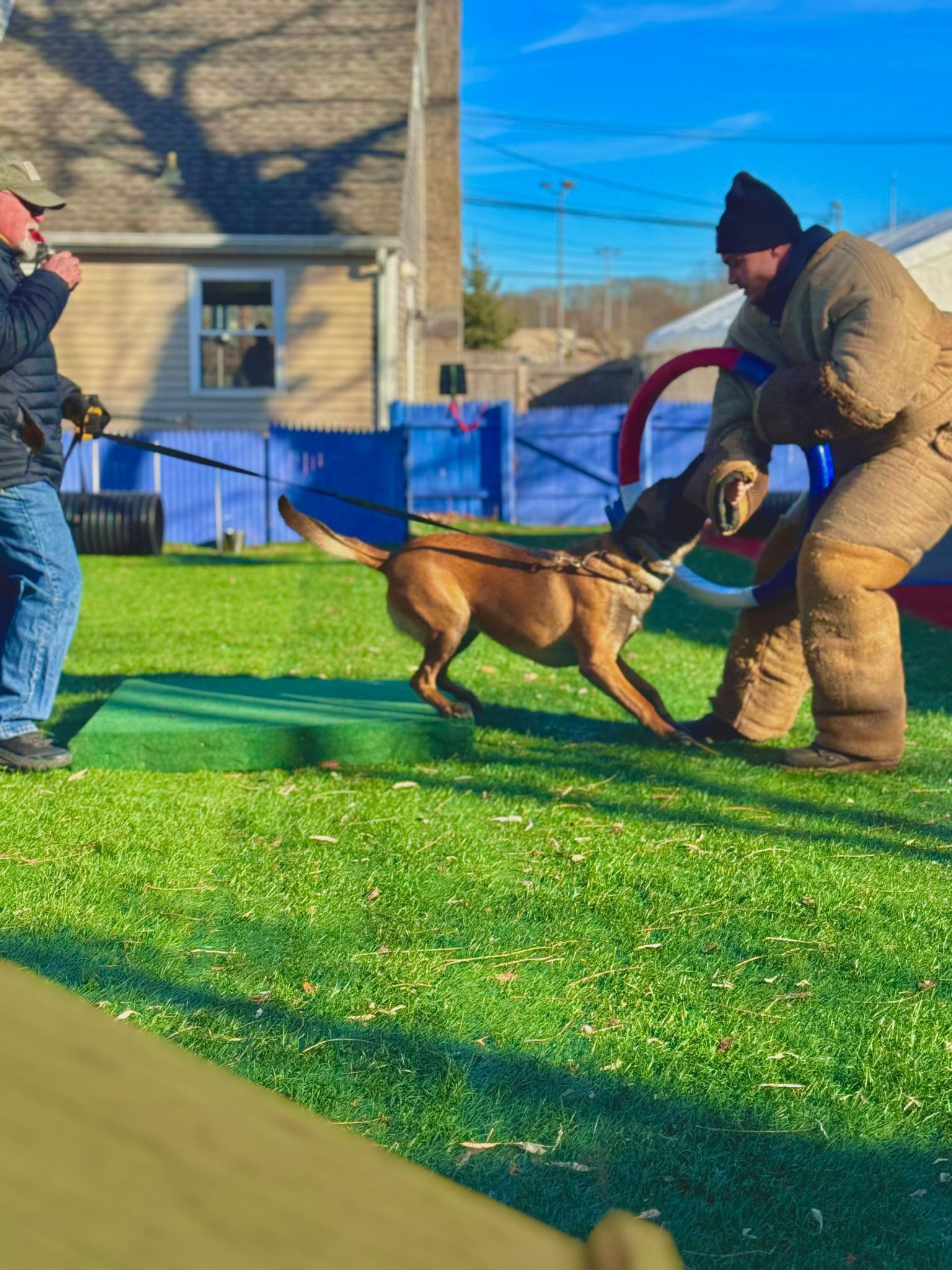
For dogs needing serious exercise and mental challenge, consider dog sports. Agility, nose work, dock diving, herding (for appropriate breeds), and protection sports are all available in the Long Island area. These activities provide intense physical and mental exercise while building advanced skills.
Backyard Activities
Don't underestimate your backyard's potential. Structured fetch games, basic agility equipment, swimming pools, and dedicated training time provide substantial exercise without leaving home. Particularly useful during inclement Long Island weather or for owners with busy schedules.
Signs Your Dog Needs More Exercise
How do you know if your dog's exercise routine is adequate? Watch for these warning signs that often indicate insufficient physical or mental activity.
- Destructive behavior: Chewing furniture, shoes, walls, or household items, particularly when alone
- Excessive barking: Barking at every sound, sight, or for no apparent reason
- Hyperactivity indoors: Inability to settle, constant motion, can't relax even after walks
- Attention-seeking behaviors: Demanding attention through barking, pawing, or pestering family members
- Difficulty focusing during training: Scattered attention, can't maintain focus on commands
- Excessive pulling on leash: Frantic pulling that improves significantly after exercise
- Escape attempts: Digging under fences, jumping over barriers, trying to bolt out doors
- Weight gain: Insufficient activity combined with normal food intake leads to weight problems
- Restless behavior at night: Unable to sleep through the night, pacing, demanding attention late
- Obsessive behaviors: Tail chasing, shadow chasing, repetitive movements, fixation on objects
Important note: These symptoms can sometimes indicate medical issues rather than exercise deficits. If increasing exercise doesn't improve concerning behaviors within 2-3 weeks, consult your veterinarian to rule out health problems.
Common Exercise Mistakes That Hurt Training
Mistake 1: Confusing Exercise with Stimulation
A walk around the block isn't necessarily exercise—especially for high-energy breeds. A 15-minute leisurely stroll might satisfy your need to feel like you've exercised your dog, but it doesn't actually meet a German Shepherd's or Labrador's physical needs. True exercise involves heart rate elevation, breathing harder, and genuine physical exertion.
Mistake 2: Exercising After Training Instead of Before
Most owners take their dog for a walk and then attempt training. This is backward. Train first when your dog is fresh and energetic? No—exercise first to take the edge off, then train when your dog can actually focus. Pre-training exercise transforms training session productivity.
Mistake 3: Inconsistent Exercise Schedules
Two long hikes on weekends doesn't compensate for sedentary weekdays. Dogs thrive on consistency. A daily 60-minute walk produces better behavioral results than sporadic two-hour adventures with sedentary days between. Establish daily routines and stick to them.
Mistake 4: Ignoring Mental Stimulation
Many owners provide adequate physical exercise but neglect mental engagement. Their dogs are physically tired but mentally restless. Incorporate puzzle toys, training sessions, nose work, and other cognitive challenges into the daily routine alongside physical exercise.
Mistake 5: Letting Weather Be an Excuse
Long Island weather can be challenging—hot summers, cold winters, frequent rain. But dogs still need exercise regardless of conditions. Have rainy day plans (indoor games, training sessions, puzzle toys), hot weather strategies (early morning walks, swimming, indoor activity), and winter alternatives (shorter outdoor sessions with more mental work).
Mistake 6: Over-Exercising Puppies
On the opposite end, some owners over-exercise growing puppies, particularly large breeds. Puppy joints and growth plates are vulnerable. Forced running, long hikes, jumping from heights, and intense exercise before skeletal maturity can cause permanent damage. Follow the 5-minutes-per-month-of-age guideline for structured exercise.
Combining Exercise and Training for Maximum Results
The most effective approach integrates exercise and training rather than treating them as separate activities. Here's how to combine them for maximum benefit.
Train During Walks
Every walk is a training opportunity. Practice loose leash walking, random sit and stay commands, recall during off-leash moments (in safe areas), focus exercises with distractions, and 'leave it' with environmental temptations. A 45-minute walk that includes 10-15 brief training moments combines physical exercise with mental engagement.
Use Exercise as Reinforcement
Exercise activities are powerful rewards. Want to throw the ball? Your dog must sit calmly first. Want to start the walk? Your dog must wait at the door. Want to enter the park? Your dog must be settled and attentive. This 'work for what you want' approach makes exercise itself a training tool.
Establish Pre-Training Exercise Routines
Before any focused training session, provide 20-30 minutes of physical activity. Fetch in the backyard, a brisk walk, play session, or run if your dog is conditioned for it. This pre-training exercise dramatically improves session quality and training progress.
Incorporate Exercise into Training
Many training exercises double as physical activity. Long recalls across the yard, retrieving practice, restrained recalls with a partner, and place-to-place commands all combine physical exercise with skill development. Be creative about merging the two.
Exercise: The Foundation of Successful Training
Exercise isn't separate from training—it's the foundation that makes training possible. A properly exercised dog is a trainable dog. An under-exercised dog struggles with virtually every aspect of behavioral development, regardless of how skilled the trainer or how dedicated the owner.
If your training efforts feel like an uphill battle, examine your dog's daily exercise routine before changing your training approach. In our 35+ years training Long Island dogs, we've consistently found that increasing appropriate exercise resolves training difficulties more often than any other single intervention. The training methods aren't the problem—the dog's energy level is.
Combine breed-appropriate physical exercise with adequate mental stimulation, integrate training into daily activities, and watch for warning signs that your dog needs more activity. The investment of time in proper exercise pays enormous dividends in training success, behavioral health, and the bond you share with your dog.
Suffolk County offers wonderful resources for active dog owners—from beautiful parks and trails to dog sports and structured activities. Take advantage of these opportunities. Your dog will be happier, healthier, and dramatically more trainable when their physical and mental exercise needs are met consistently.
At The K-9 Center in Hauppauge, we help Long Island families develop comprehensive training plans that incorporate proper exercise routines. Whether you're struggling with behavioral issues, working on basic obedience, or pursuing advanced training, we ensure exercise is part of the solution—not an afterthought.
GET COMPREHENSIVE TRAINING THAT WORKS
The K-9 Center: Holistic Dog Training Since 1989
Frustrated that training isn't working? The issue might not be your training—it might be your dog's exercise routine. Our experienced trainers develop comprehensive plans that address physical activity, mental stimulation, and skill development together. Get the holistic approach that delivers real results.
Schedule your free training evaluation today.
Call (631) 588-0000 | Visit thek9center.com/contact
Serving Hauppauge, Ronkonkoma, Lake Grove & all of Suffolk County for 35+ years
About The K-9 Center's Comprehensive Training Approach
The K-9 Center has provided expert dog training to Suffolk County families for over 35 years. Located in Hauppauge, NY, we believe successful training extends beyond commands and corrections—it encompasses your dog's complete wellness, including appropriate exercise, mental stimulation, nutrition, and behavioral health.
Master Trainer John Browne emphasizes a holistic approach to dog training, ensuring clients understand that exercise, mental engagement, and structured training work together to create well-adjusted, well-behaved dogs. Our programs incorporate these elements into comprehensive plans tailored to each dog's breed, age, temperament, and family situation.
Whether you're a Hauppauge family with a high-energy puppy, a Ronkonkoma owner dealing with adolescent behavior challenges, or a Lake Grove resident addressing longstanding issues in an adult dog, we provide the expertise and support to develop effective training plans that work with your lifestyle and your dog's needs.
Contact The K-9 Center today to discuss how comprehensive training can transform your dog's behavior and your relationship with your canine companion.